Part 15 The Garden
Housebuilding Log 15 Gardens
Where to Start?
I guess at the beginning. This half acre of steeply sloped land had been pretty badly abused over the years before we got to it. Chopped to smithereens, any decent trees gone, the black topsoil all washed away and left with a few enormous trees.
The climate here is hot and dry drought summers, and tropical downpour raining winters. Strong salty winds almost all the time. Poor clay soil, acidic oak leaves falling all the time, and the dreadful hateful leafcutter ants, called weewee ants here.
So, things are tough for a plant around here. Native plants are not what most people would call pretty, although they certainly are hardy. To make a ‘civilized’ garden takes some thinking, and a lot of hard work over many years. As I found out.
Here’s what I started with: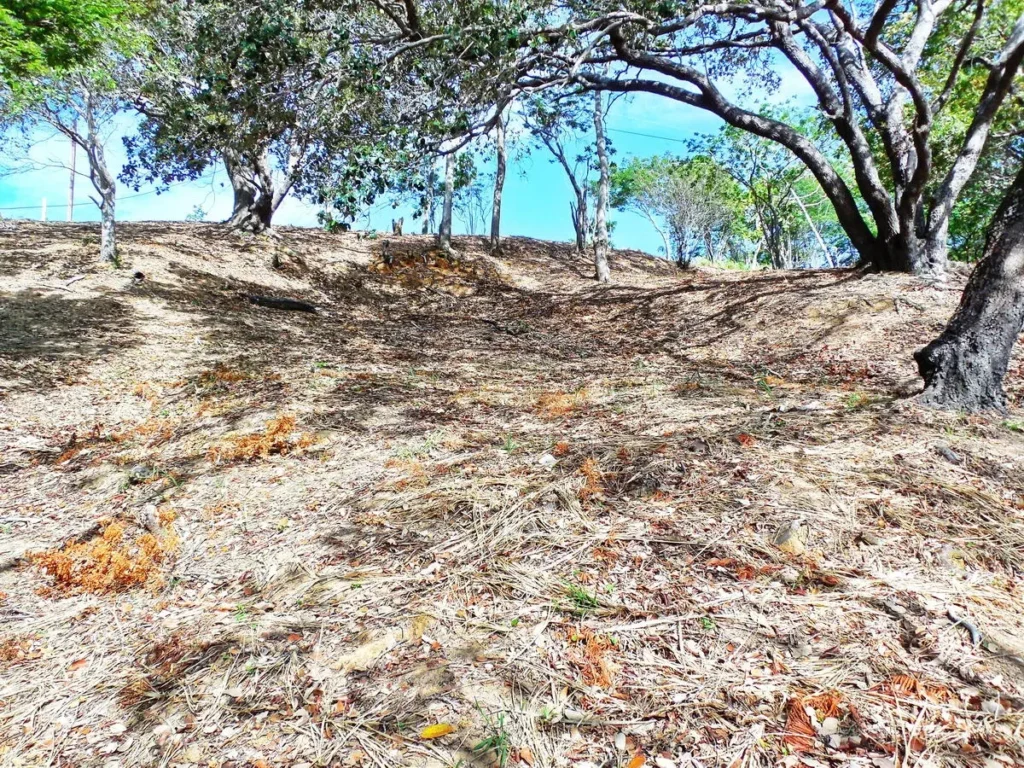
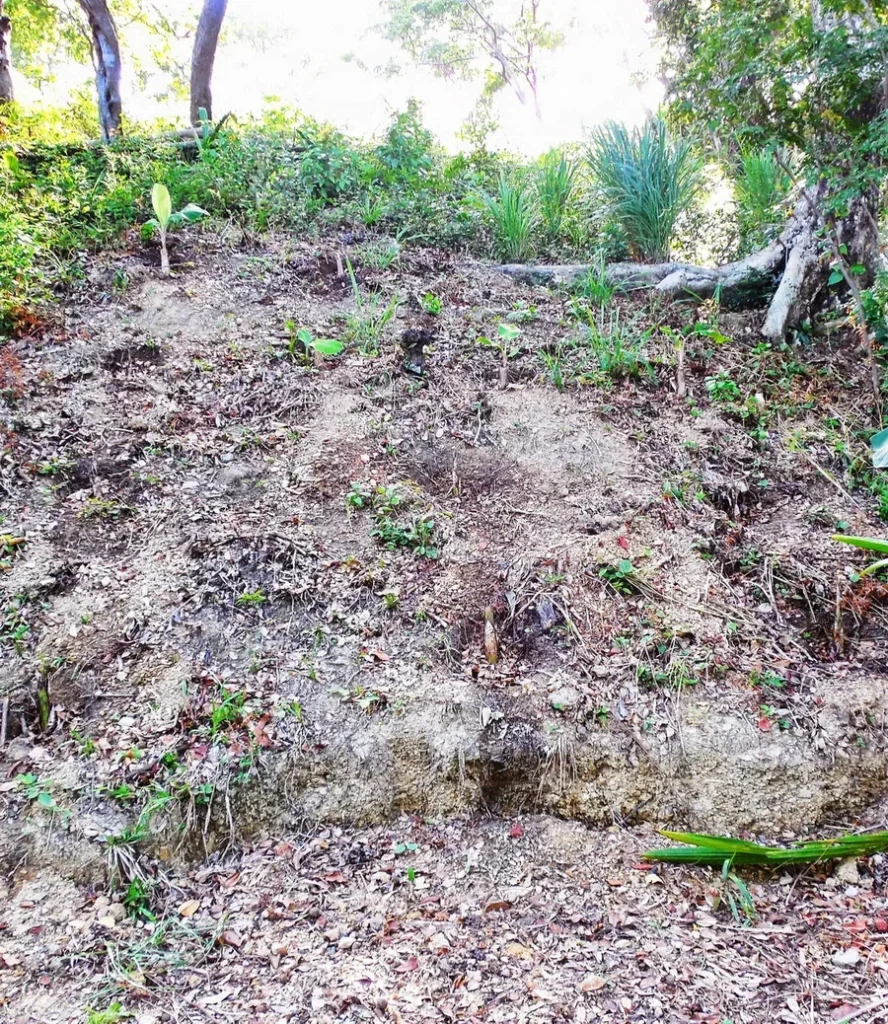 This is actually the best areas, many were stripped bare of everything, with nothing remaining at all except hard-packed dried out red clay.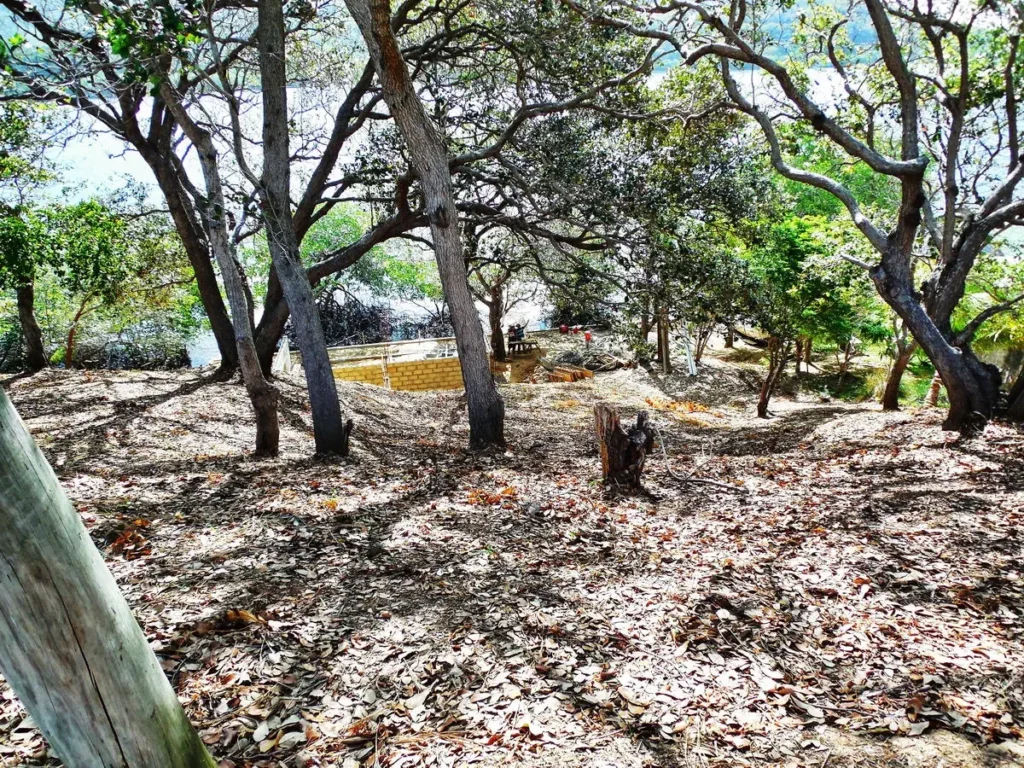
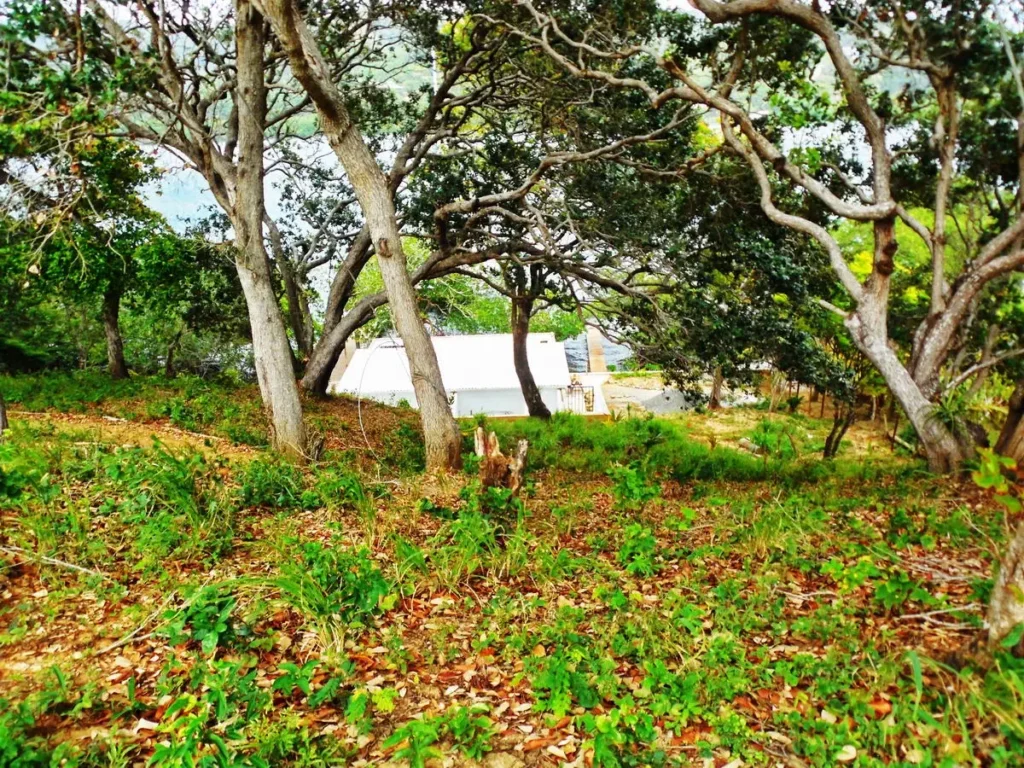 In the dry season, it was all bare and brown. In the rainy season it was all brown and tons and tons of weeds.
For the first 3 years or so of the housebuilding, I didn’t do much up the hill. It was just so difficult getting up there, and so daunting with the size of the property, I just mostly let the weeds take over. After all, they were preventing the terrible mud runoff from the property every time it rained.
I wasn’t much use for the foundation digging, cement work and housebuilding, so I started educating myself on Tropical Gardening with books and experimenting.
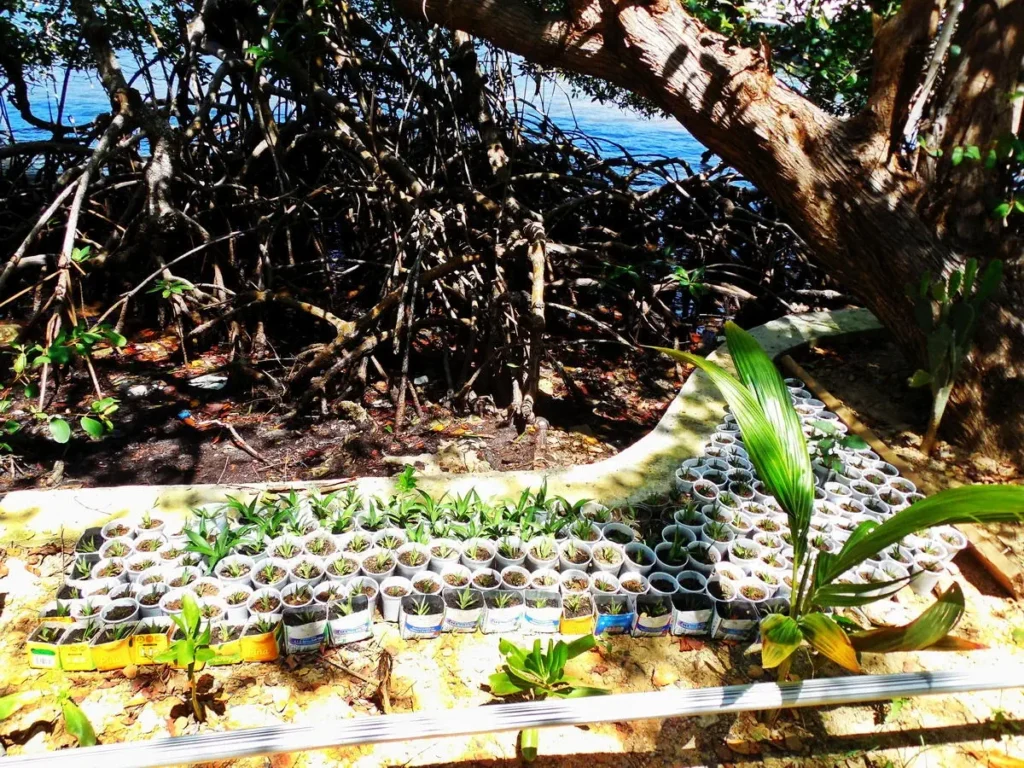
I built a little nursery. And experimented with some plants. Here’s the first nursery aboard the catamaran we were living on, with some mango trees growing from seed.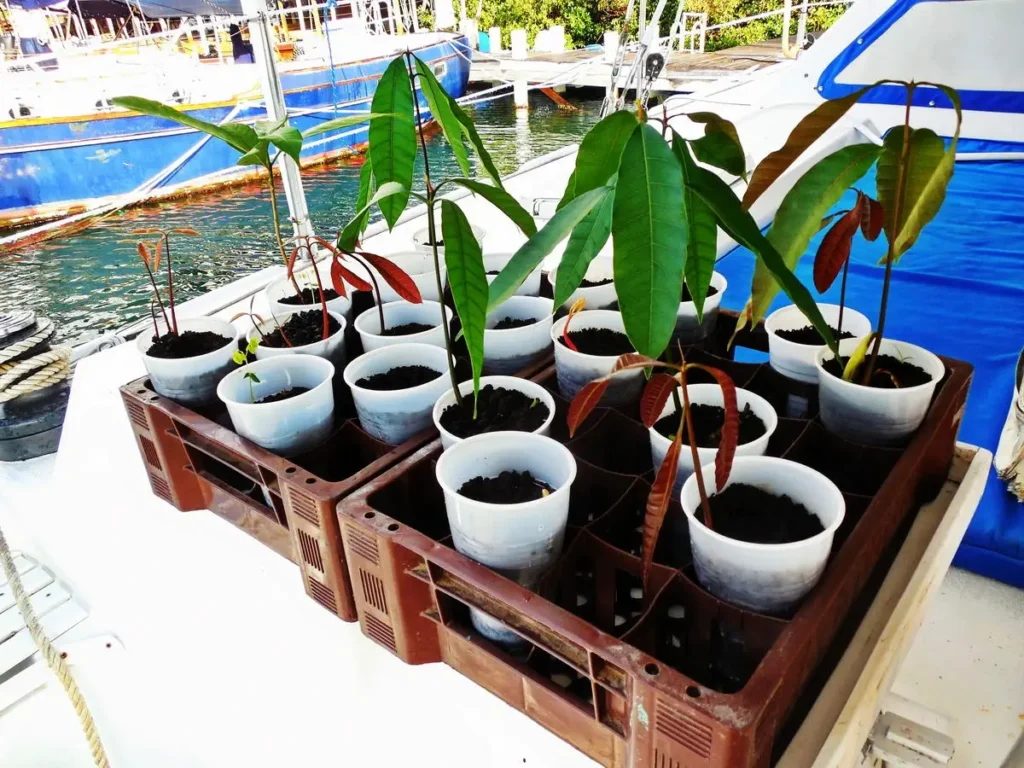
 Most of what I planted died, because I didn’t understand yet the importance of planting just before the rainy season starts, otherwise things just dry up and they don’t make it.
I found a little corner away from most of the building chaos, and built a place to start growing the hardiest of plants I could find – most came from friends and nieghbours. People are very good around here helping with free plants!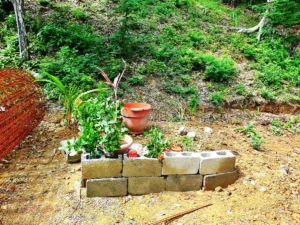
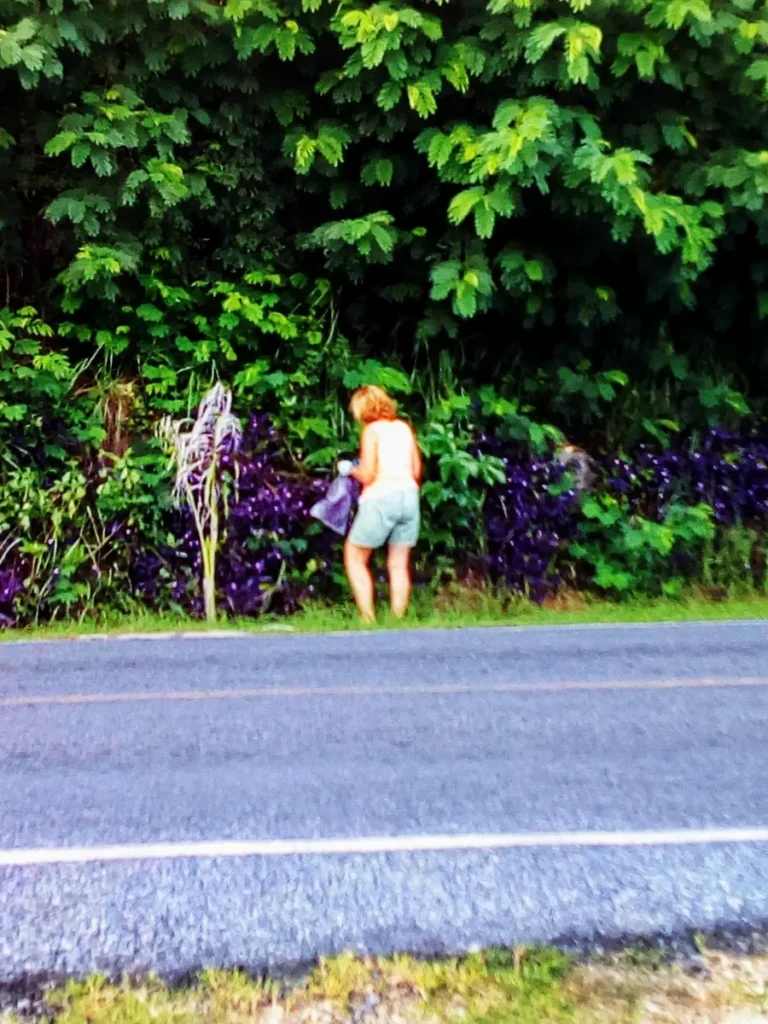
 However, in the depths of my desperation, I did sink low enough to steal plants from the side of the road. I kept some clippers and plastic bags in the car glove compartment just in case!
 I started planting stuff along the seawall since that was the only area I could really get to. Most of this stuff died too, from lack of water mostly.
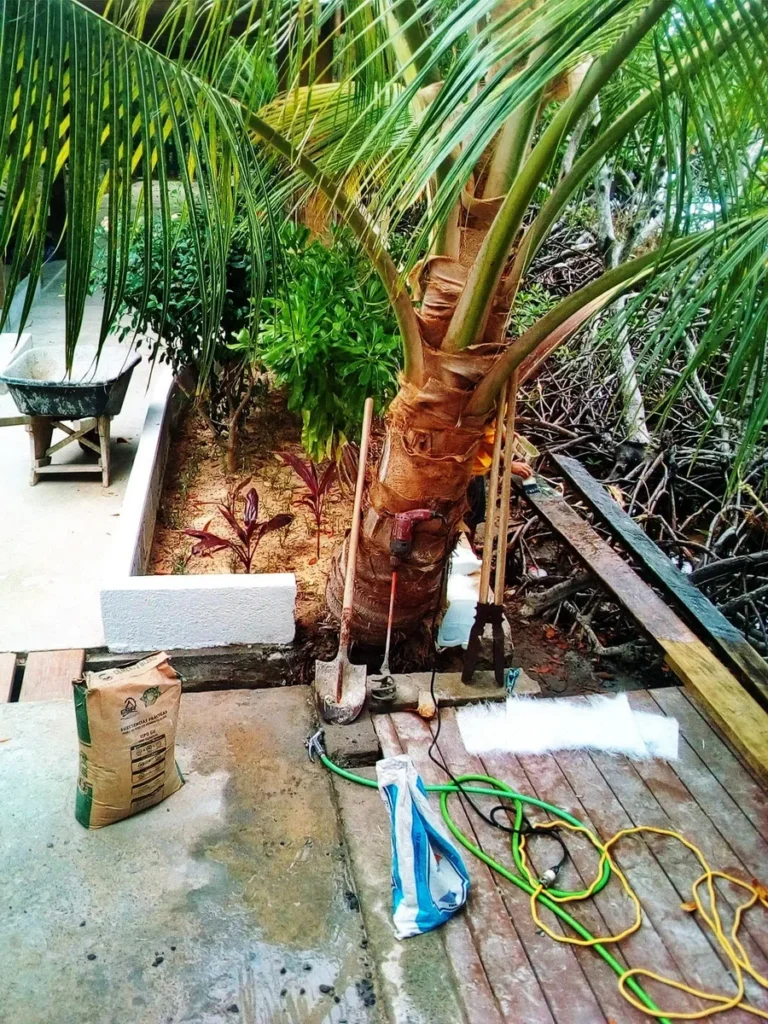
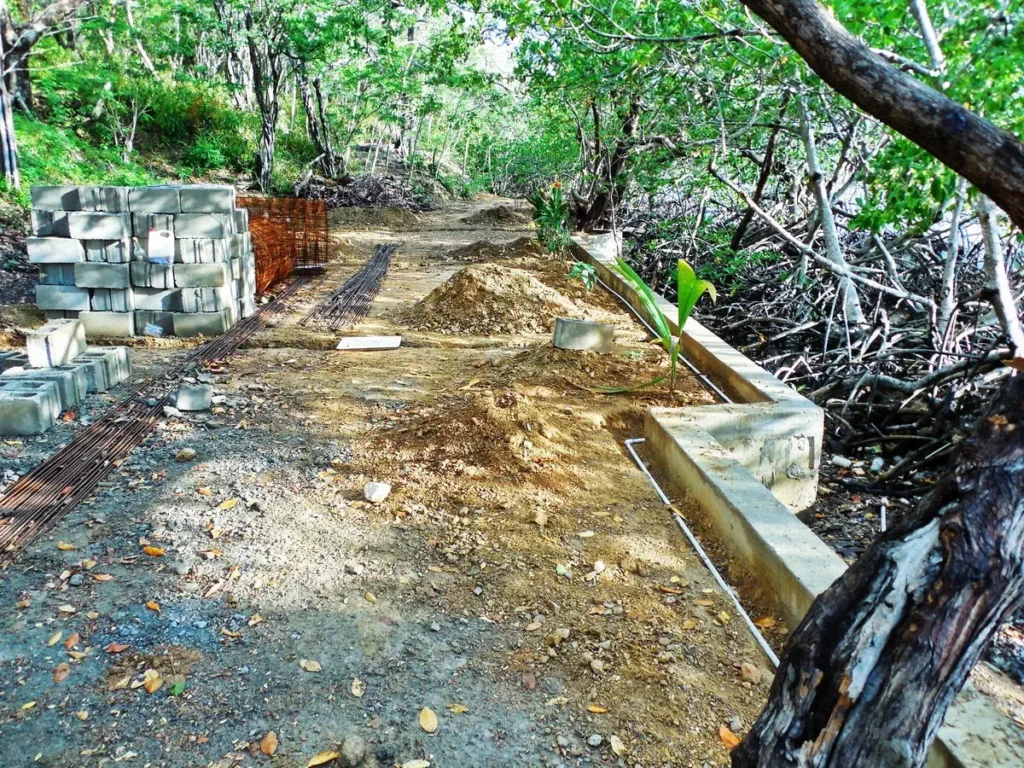 But I was learning how to propagate. The little palm tree lived though, but now it is so big it grew into the seawall, so will need to be removed when it’s replacement a few feet away gets big enough. Another lesson – things grow BIG here!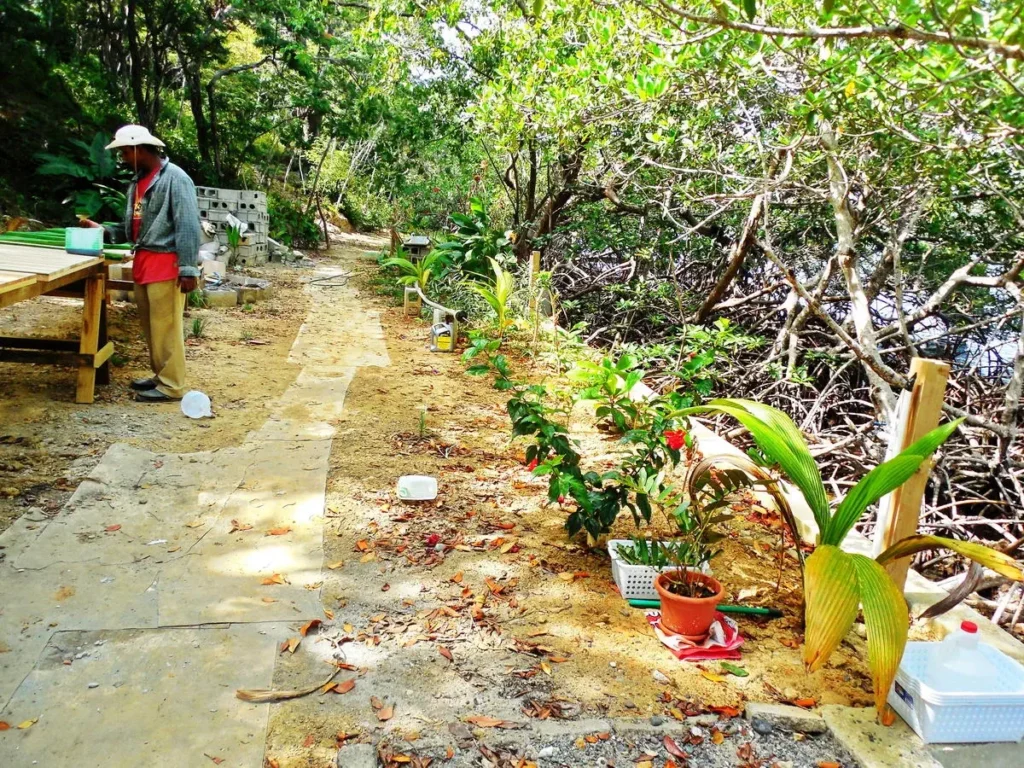
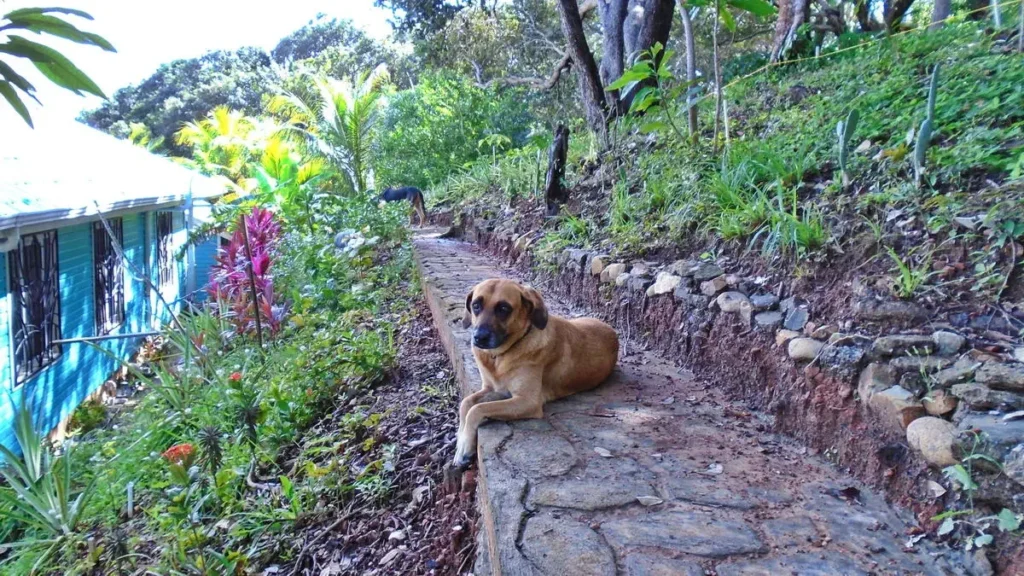
 After some 3 years I guess, I decided I just had to be able to get around up there on the hill. So, I just got started at the bottom.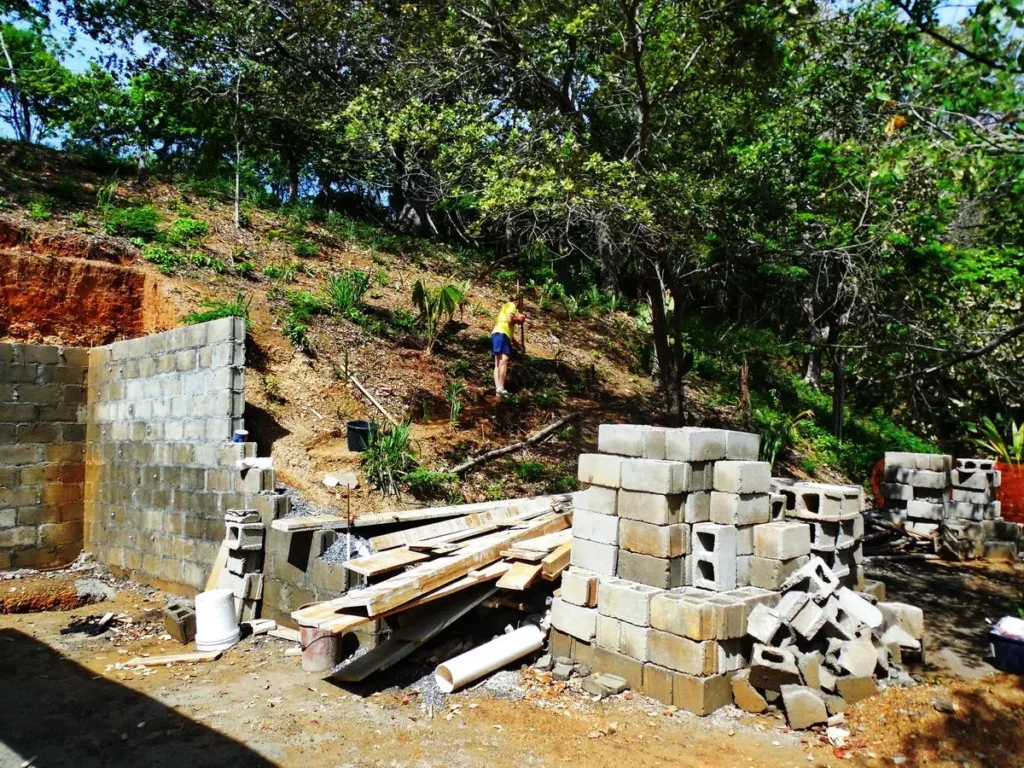
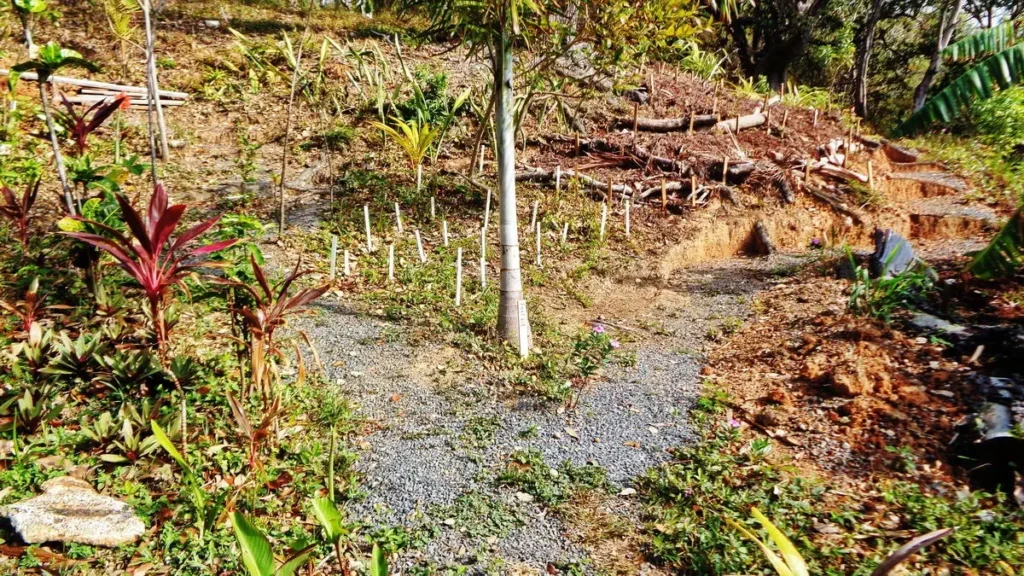
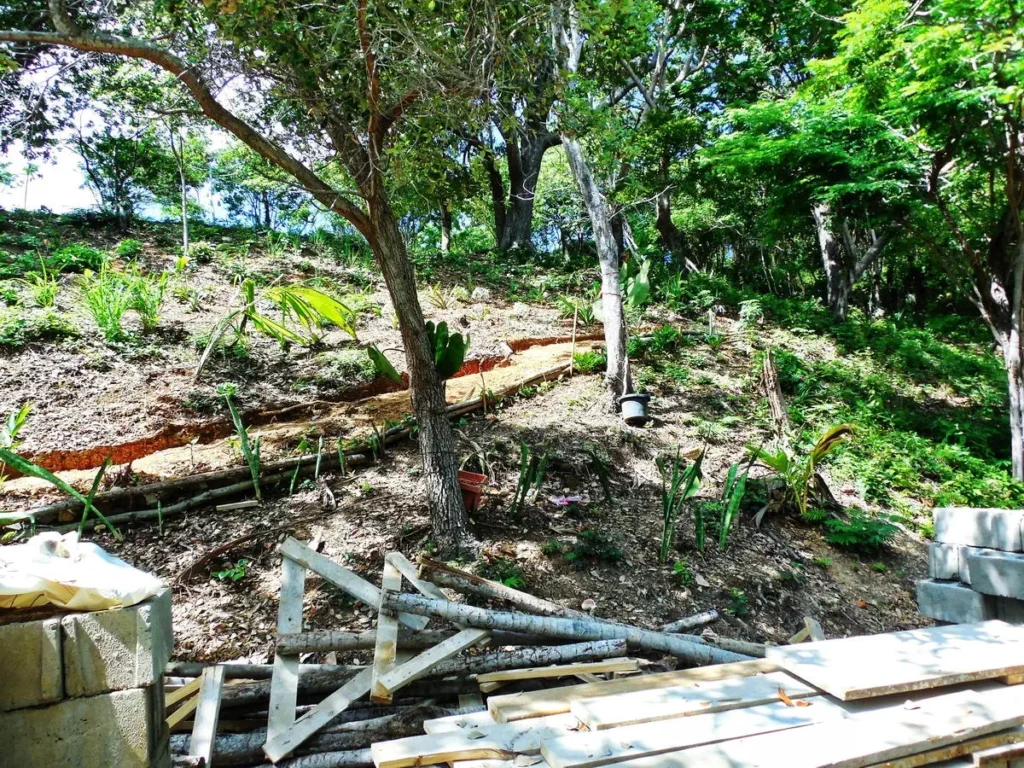 The trick was to make a level path, sloping slightly up, across contour so that the mud doesn’t run straight downhill, and to make climbing easier. I dug an uphill straight-down edge, and on the downhill side I put tree branches and rocks and anything else I could find laying around the place, held in place with stakes.
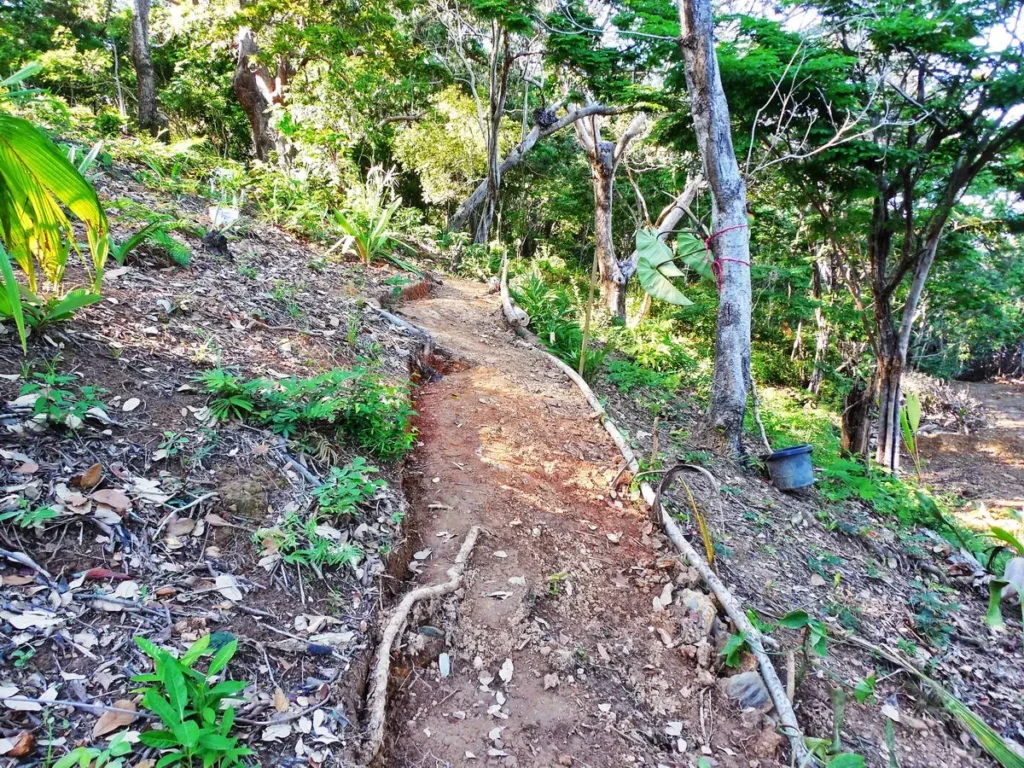 It was very satisfying being able to climb around up there, so I kept going all over the property.
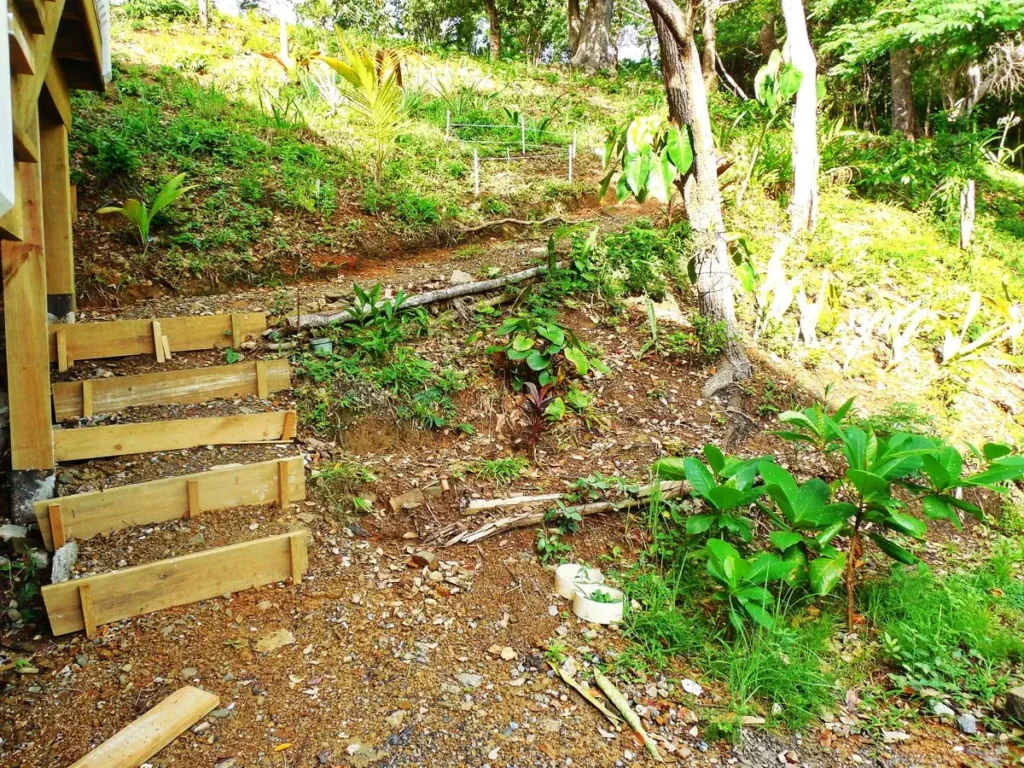
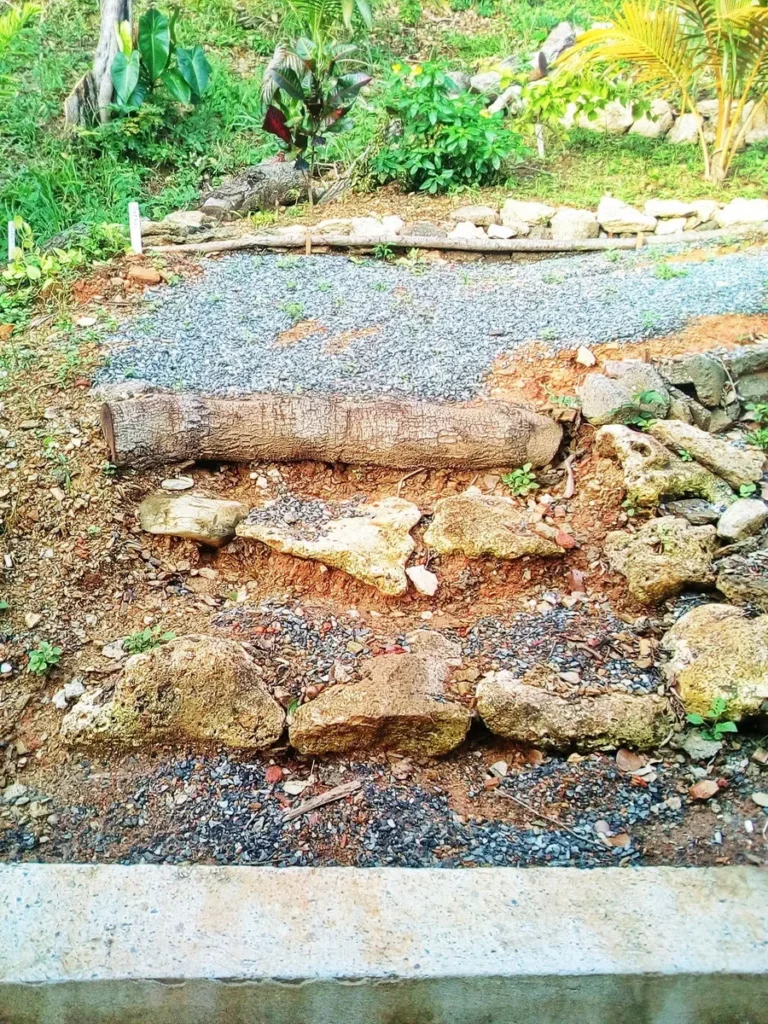
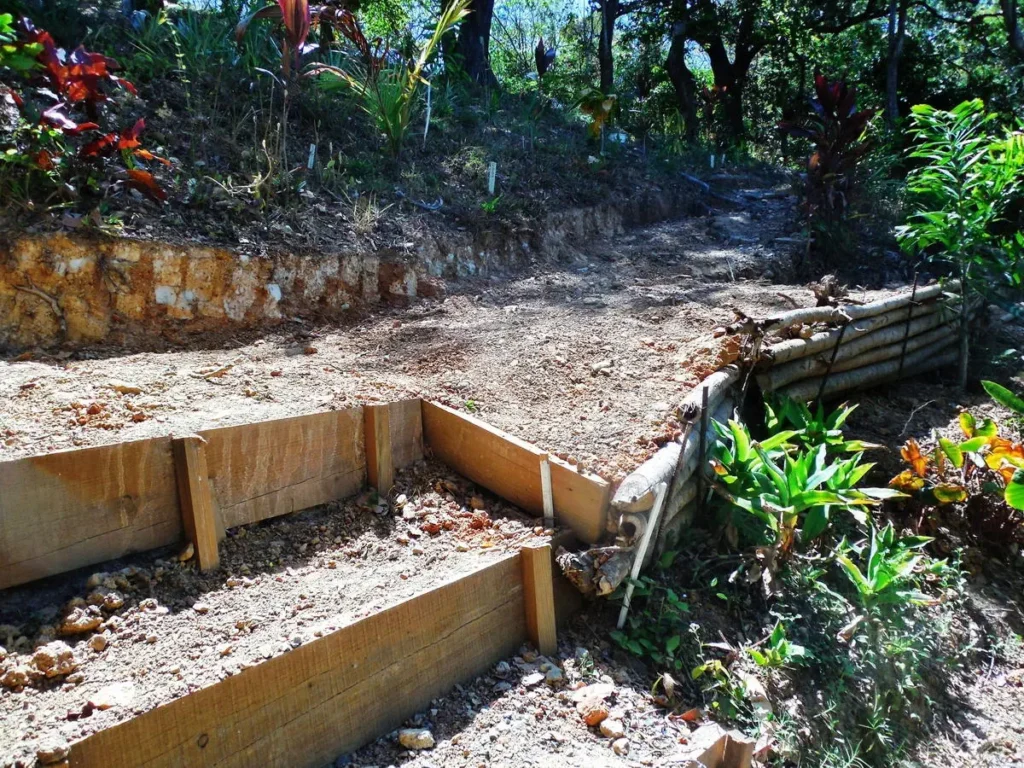 Some places needed steps, so I made them up from scrap wood and rebar laying around and filled it in with mud and gravel.
 When I wasn’t digging and hauling gravel, I was expanding the nursery, and my knowledge. I planted the toughest of tough plants to reduce erosion – these were able to hold the fallen leaves where they fell and not wash all down the hill with the mud.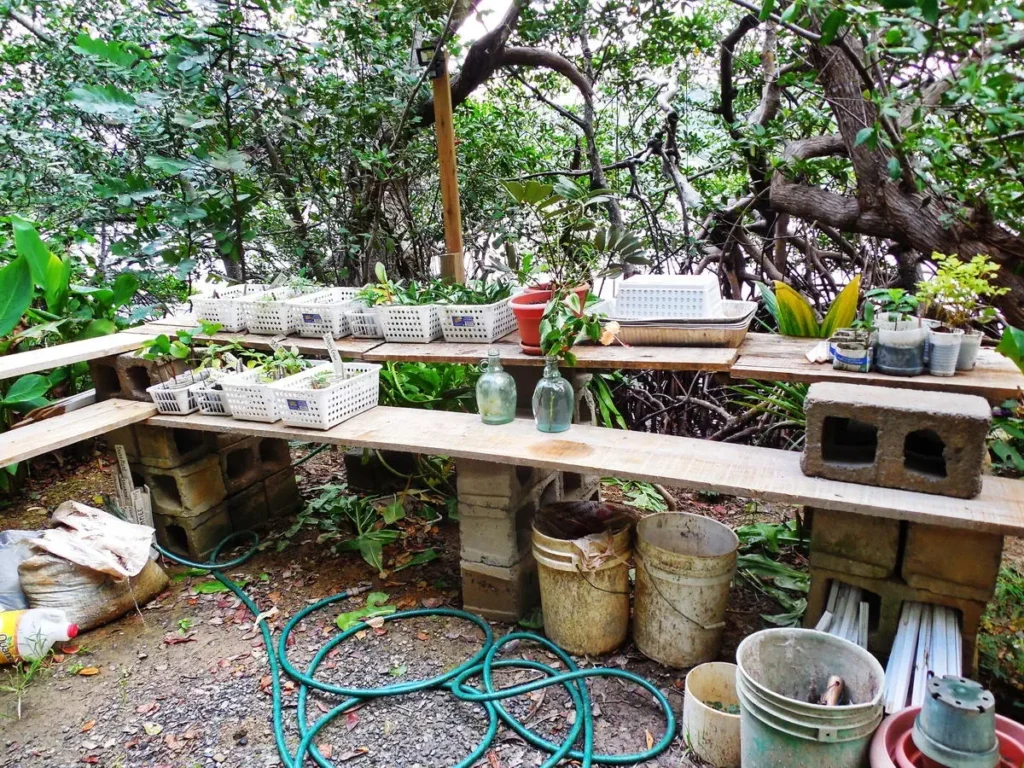
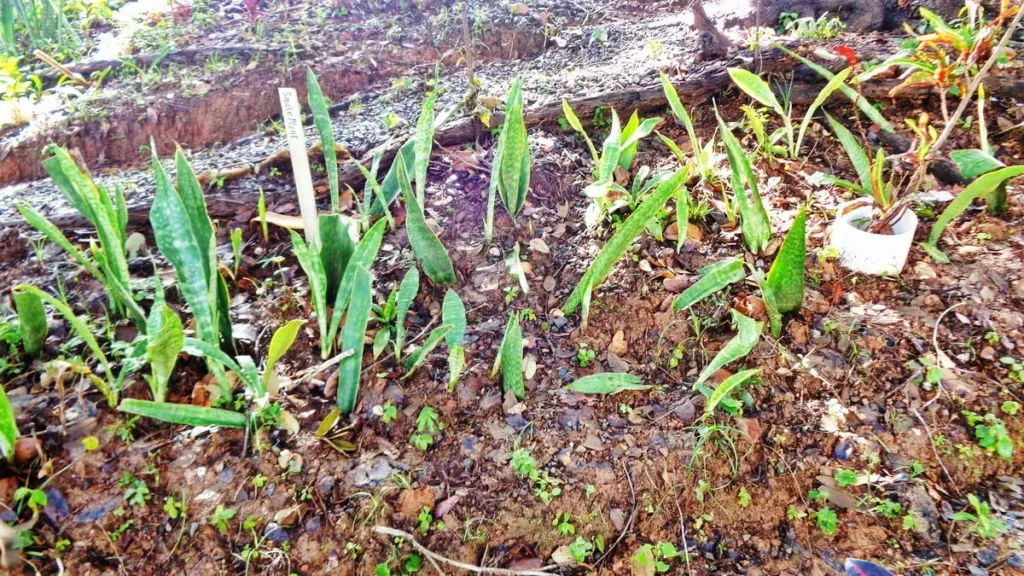
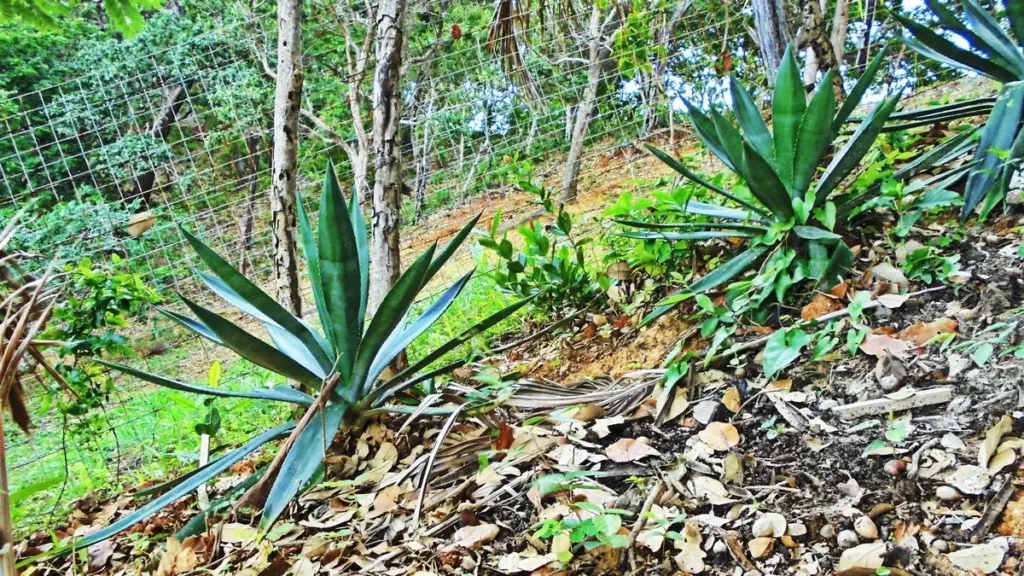 These plants were resistant to the dreaded weewee ants, which are such a terrible pest, killing all the nicest of the nice plants you try to grow.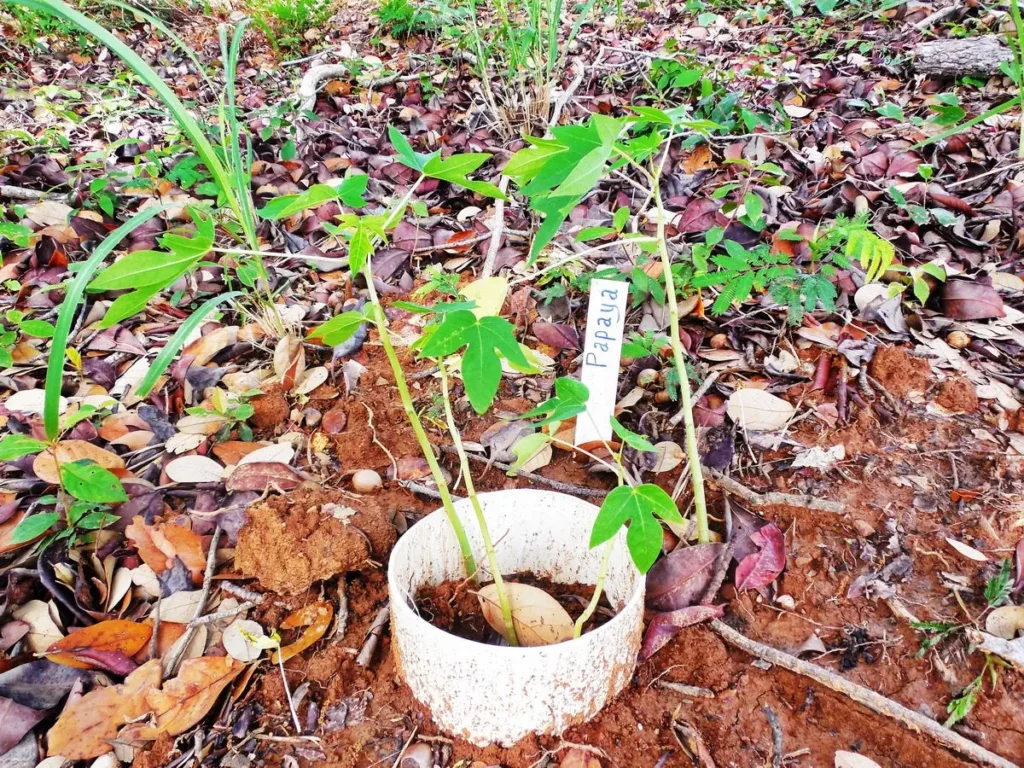
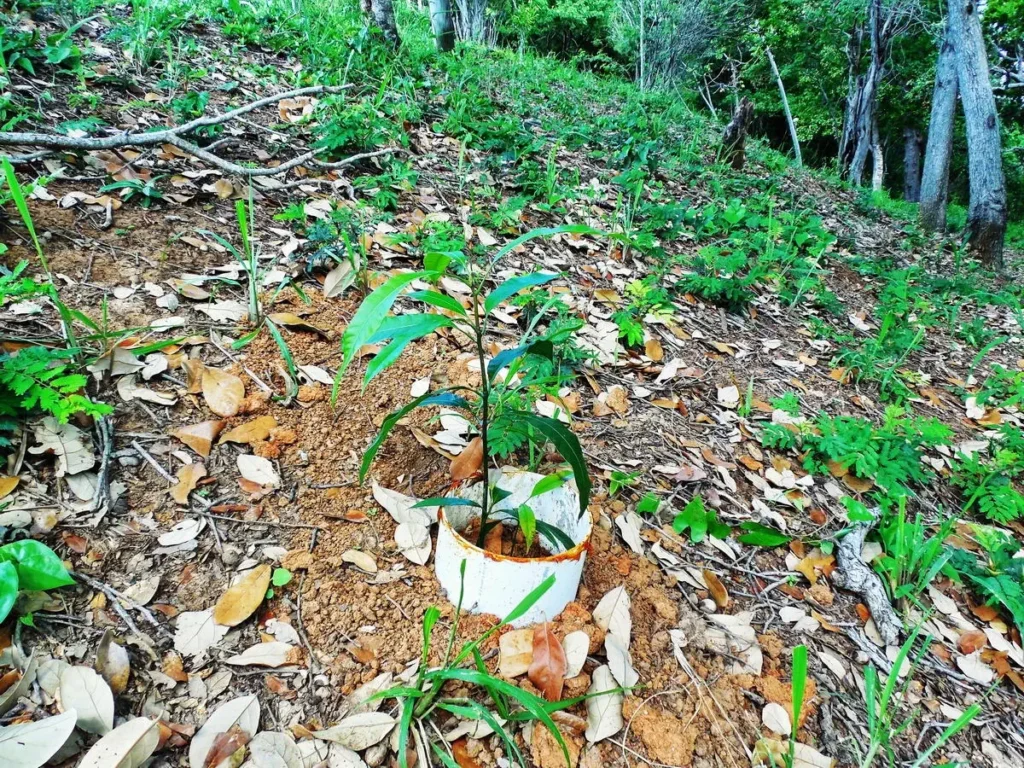
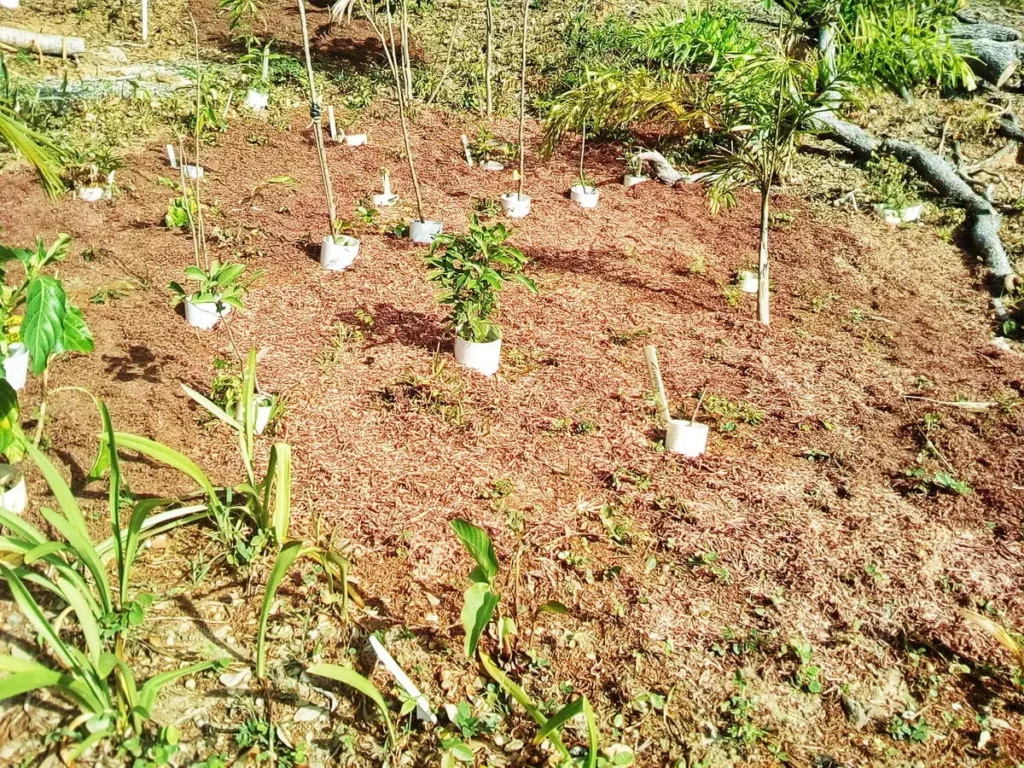 I got Ed to cut up leftover PVC pipe so I could surround the little plants, hopefully the weewee’s would get to the plastic wall and decide that this is not food, and go elsewhere. I think it worked, a little, but sometimes they would still climb that wall and eat my little sapling. The PVC pipe also kept the water around the plant instead of washing all down the hill
Speaking of water, I absolutely needed to get water up that hill. So, TieTie ran a series of pipes all along the paths to various places on the property, buried it underground, and put in posts and spigots to attach garden hoses. It was still a careful thing to water though, during the dry season especially when water could run short in the tanks.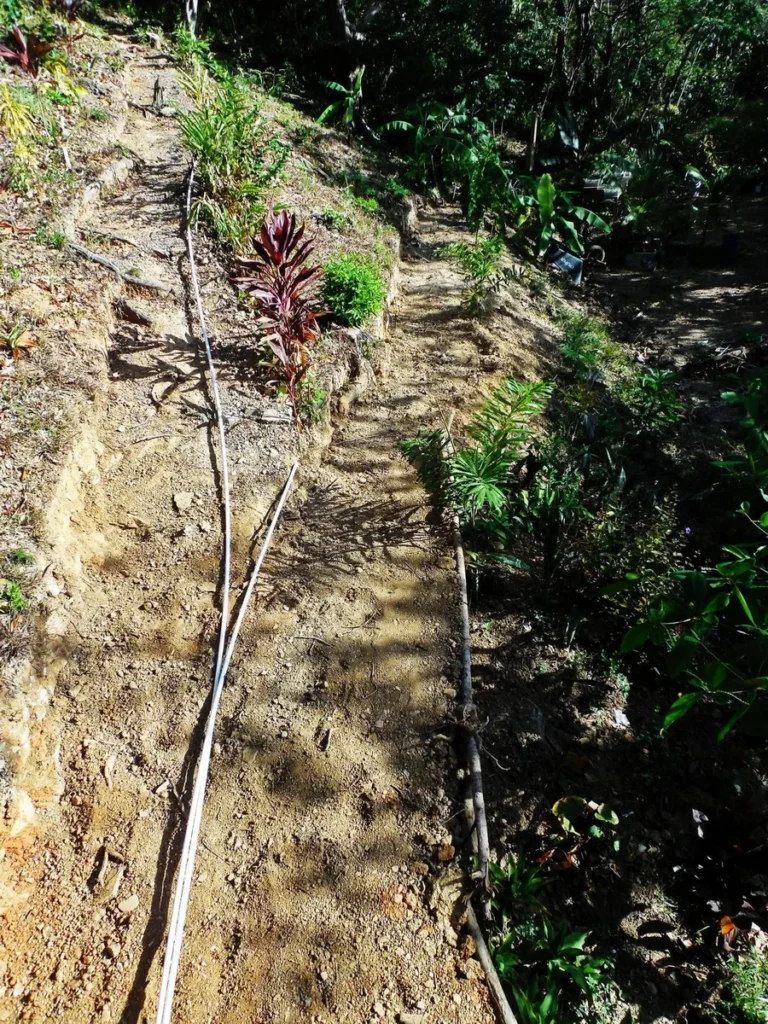
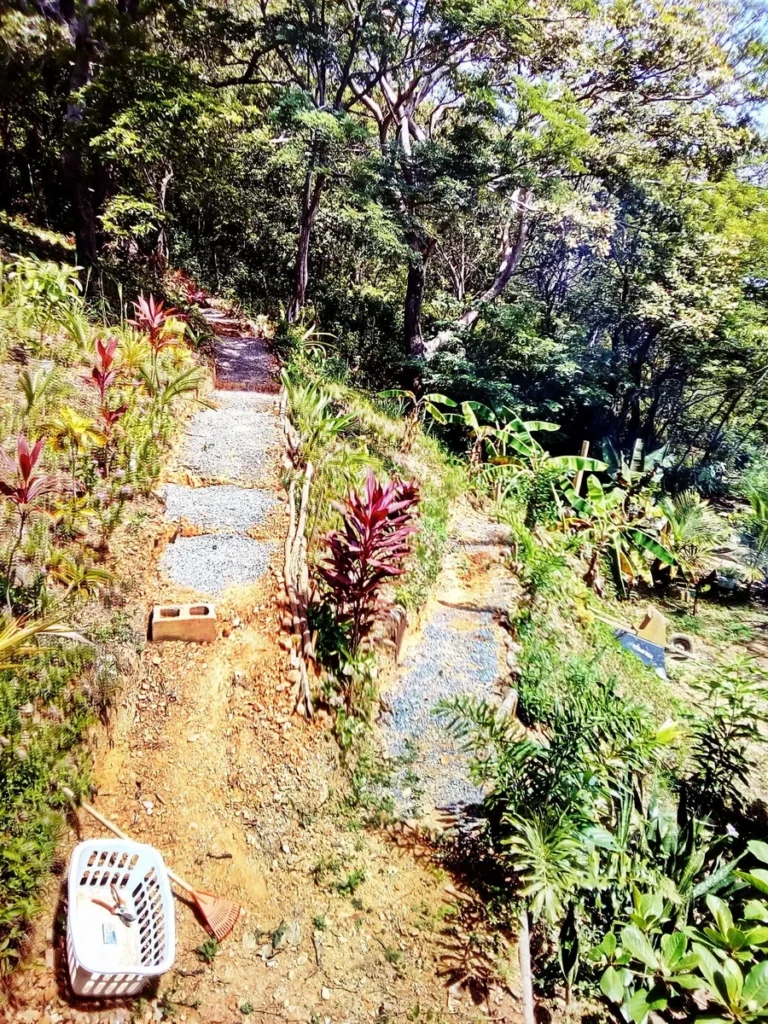 I must have carried a million buckets of gravel up that hill, since I can’t carry a very big bucket I had to make many trips.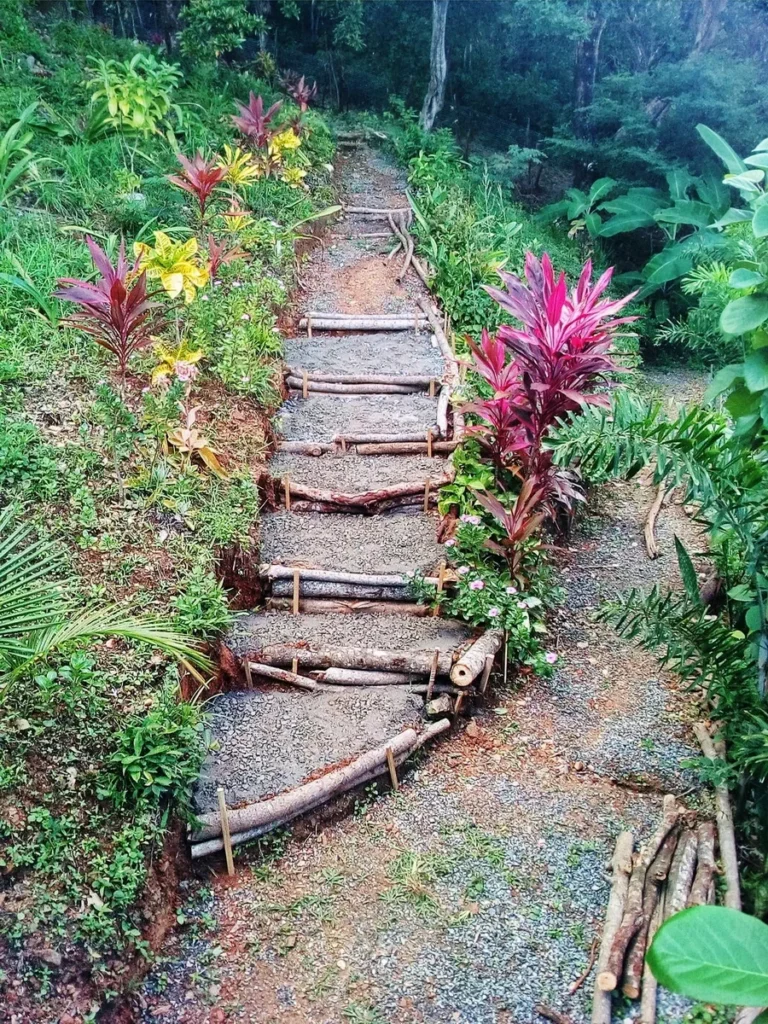
 It was all good, and everything was going along great, but then came the weeds! They were everywhere, and relentless…..my nice gravel paths became a major work project trying to keep them clear.
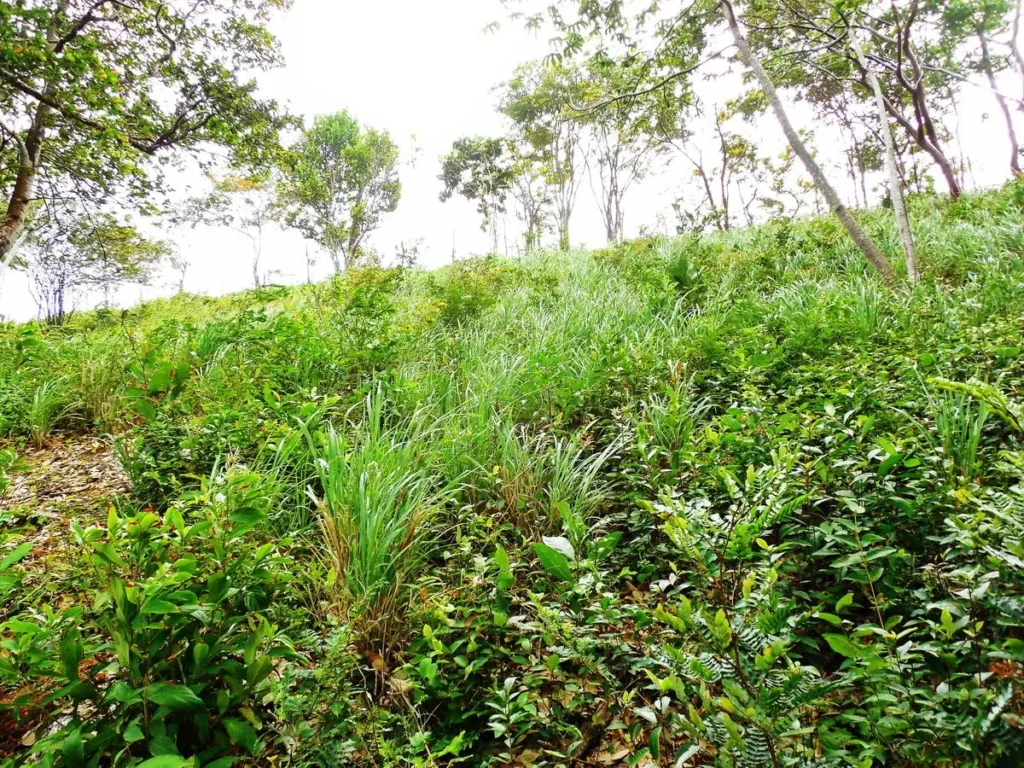
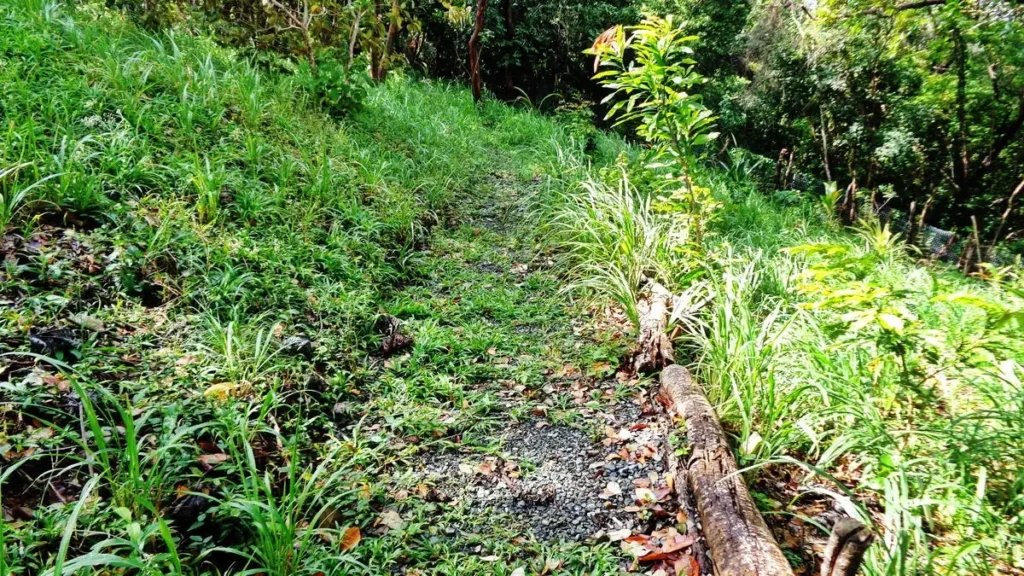 I learned the names of all the worst of the weeds, from cow grass to crabgrass to bindweed and prickly cockspurs complete with fire ants, and everything in between. The one section of the whole hillside was absolutely covered in this cow grass which grows waist high, but fortunately is easy to pull out and I eradicated it entirely from that hill, although it took 5 years.
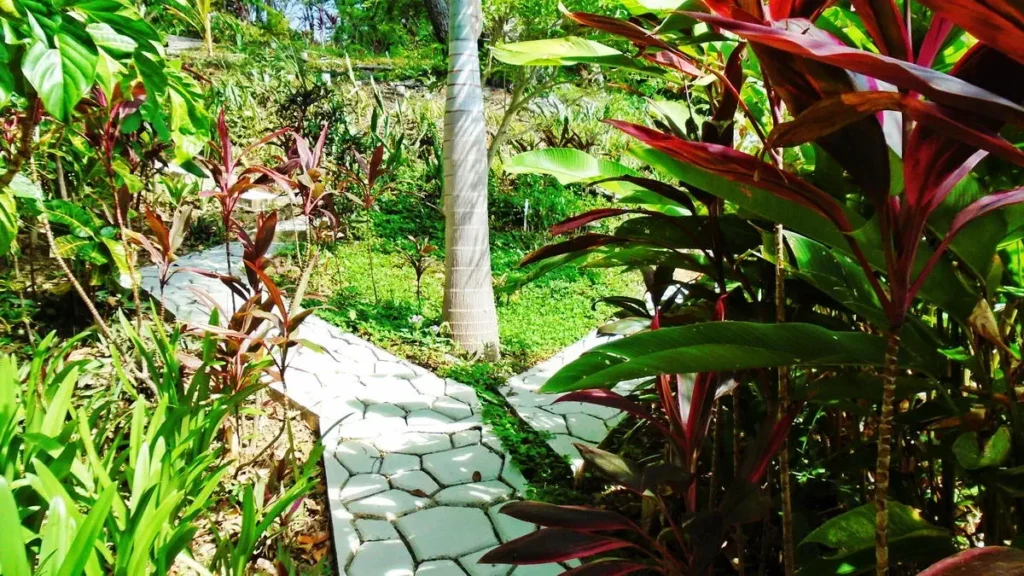
 Once the worst of the cement work was done on the house, we decided we needed some cement paths, so I could stop this endless weeding maintenance. So, we bought a cement form and hired Wilson & Andy to do the job. It took over 6 months, mixing the gravel, sand and cement down at the bottom of the hill and carrying it up one agonizing 5-gallon pail at a time.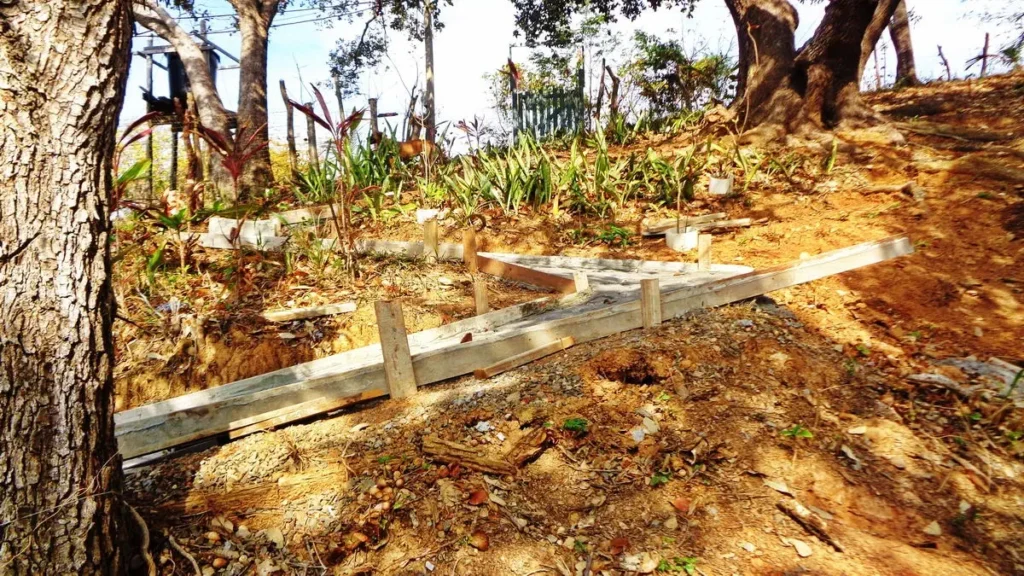
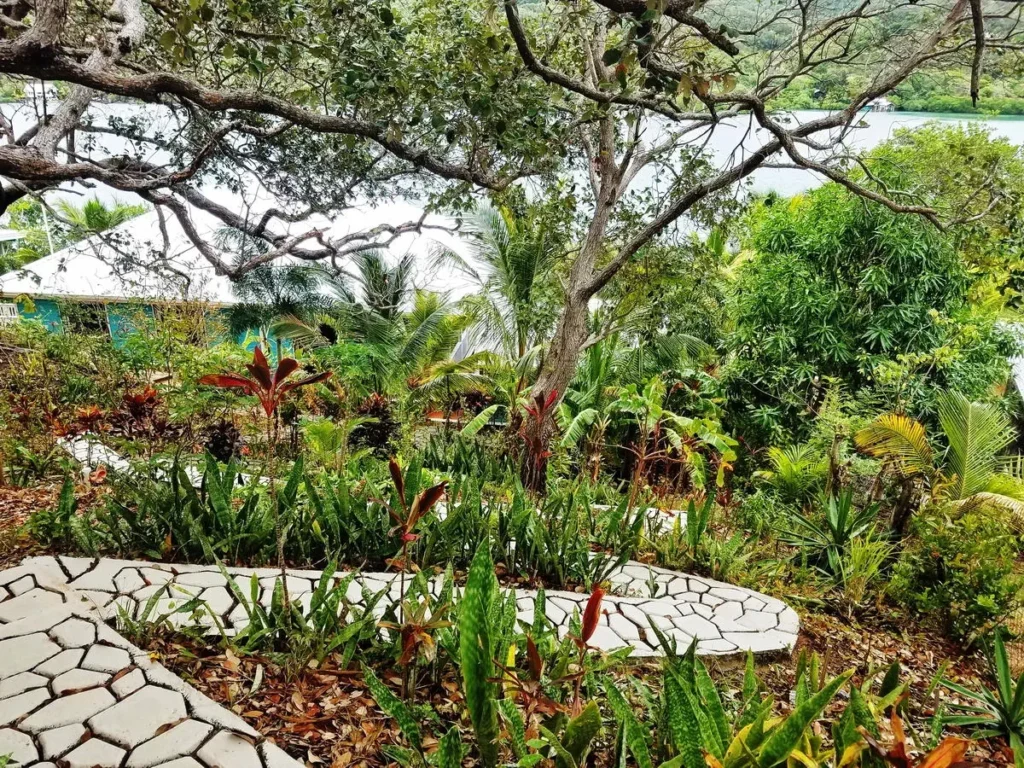
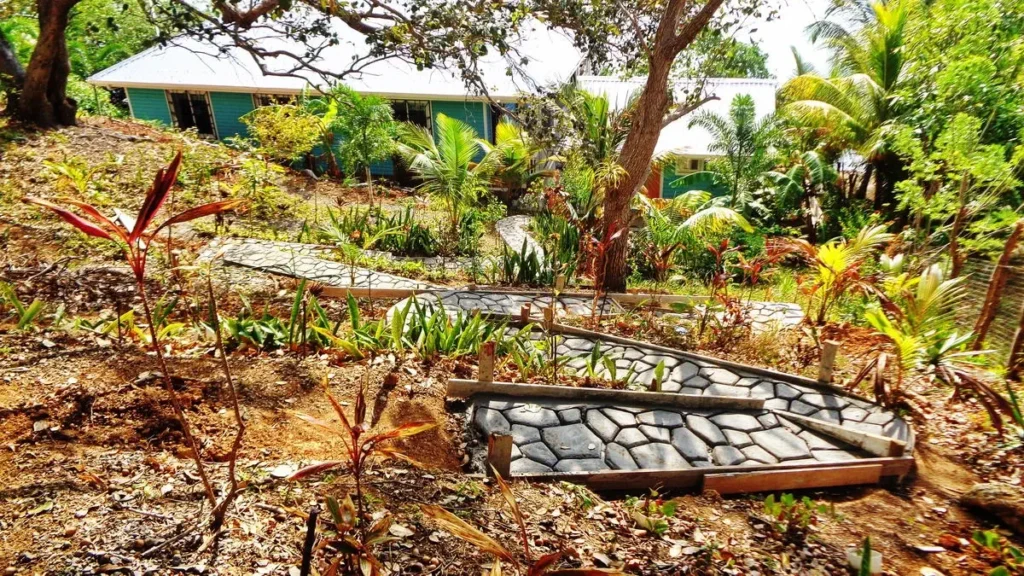 We used the original dug pathways I had already done.
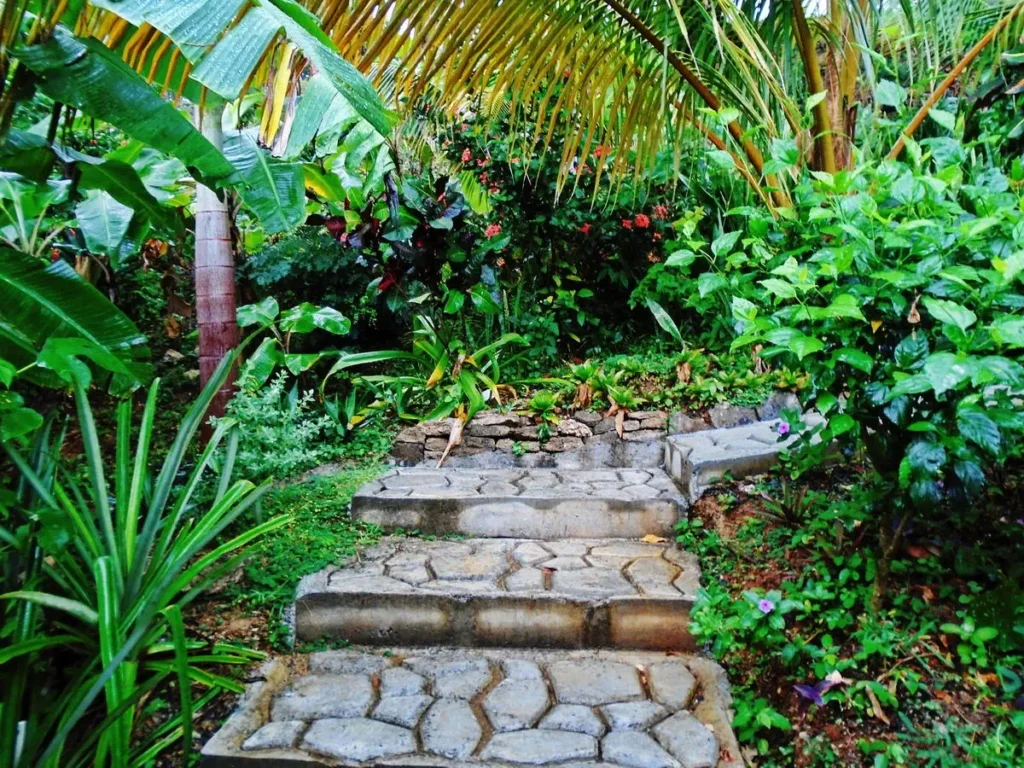
They built forms along the sides, then mixed the cement and used the former thing to make the pattern. I wanted the uphill side of the path to be a cement canal, so the water would stop there and be directed down to another area to absorb into the ground, and from there another canal. This is a terracing effect to it limits runoff during the rainy season when it rains absolute buckets over a long period of time. Once I explained the concept, they did a real nice job of the canals.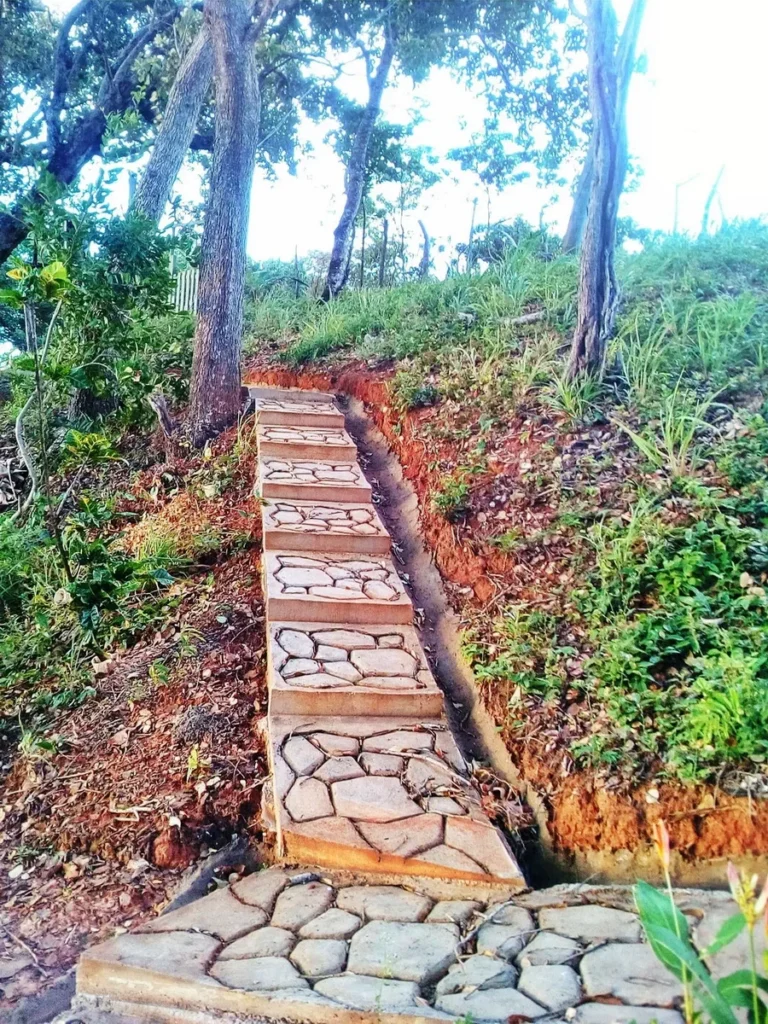 And they replaced my rough rock steps with a decent cement one.
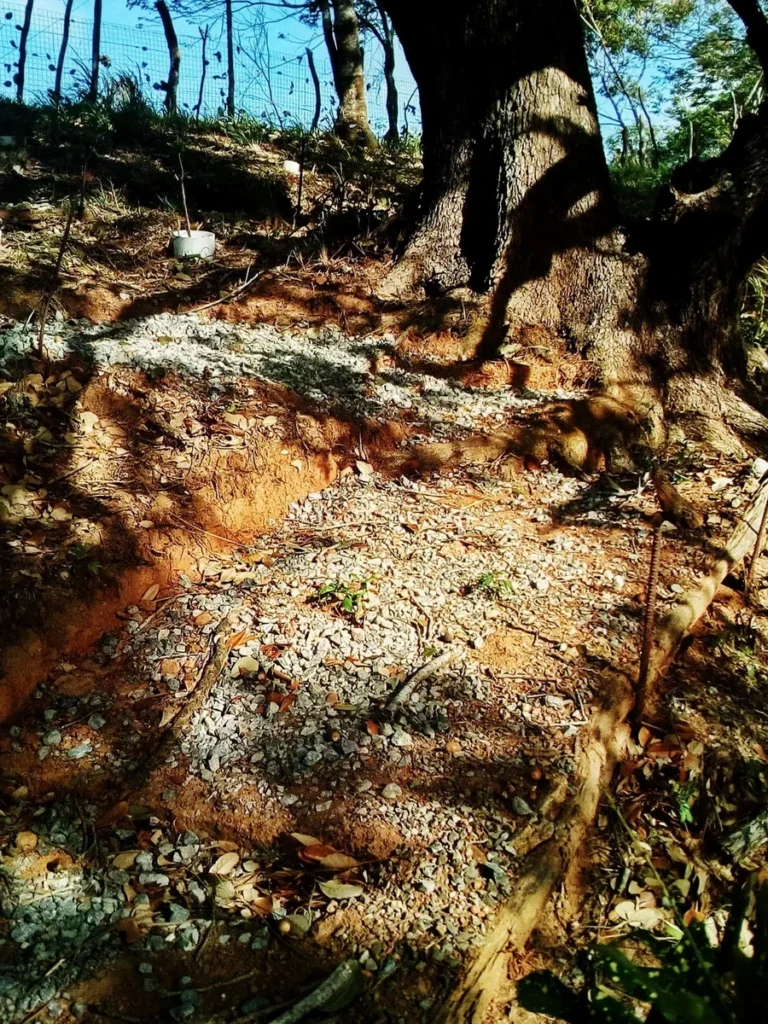
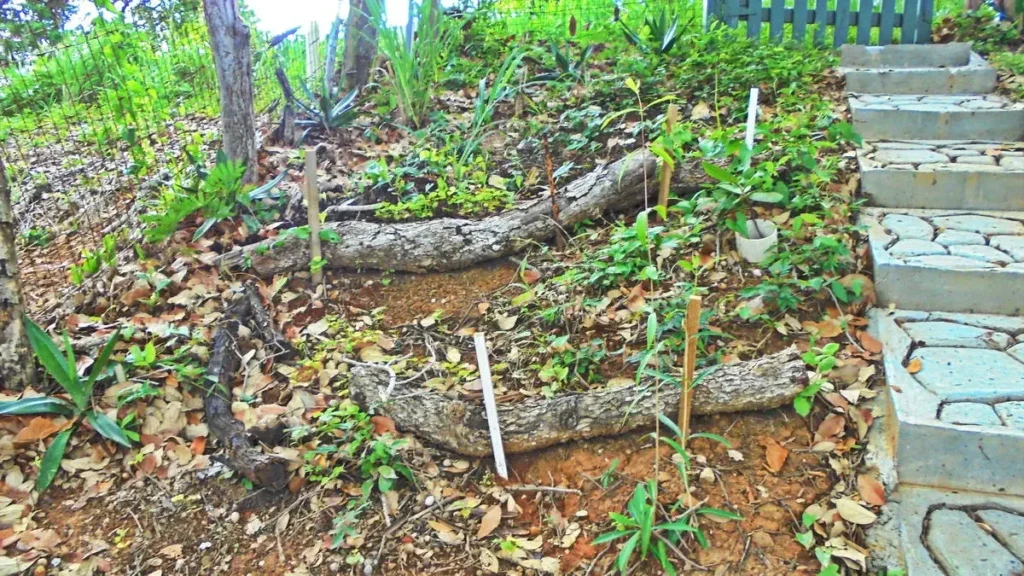
 OK. So, while all this was going on, I was busy working on some of the worst of the worst areas. Here’s one I call the Lasagne patch. Under a big oak tree with really steep slope and pure hard baked clay. It’s still not the greatest but I terraced it with branch staked in place, and threw on any kind of leaves, grass clippings, even sargasso weed that washed ashore and I rinsed with fresh water. Eventually it started to sustain some of the toughest plants.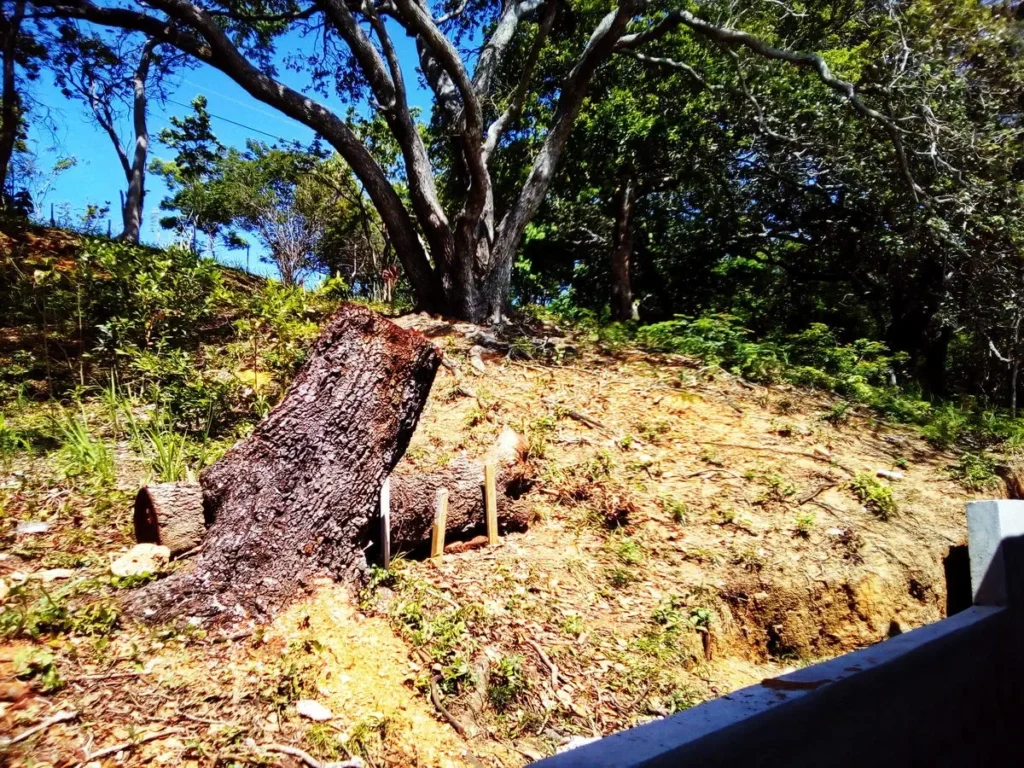
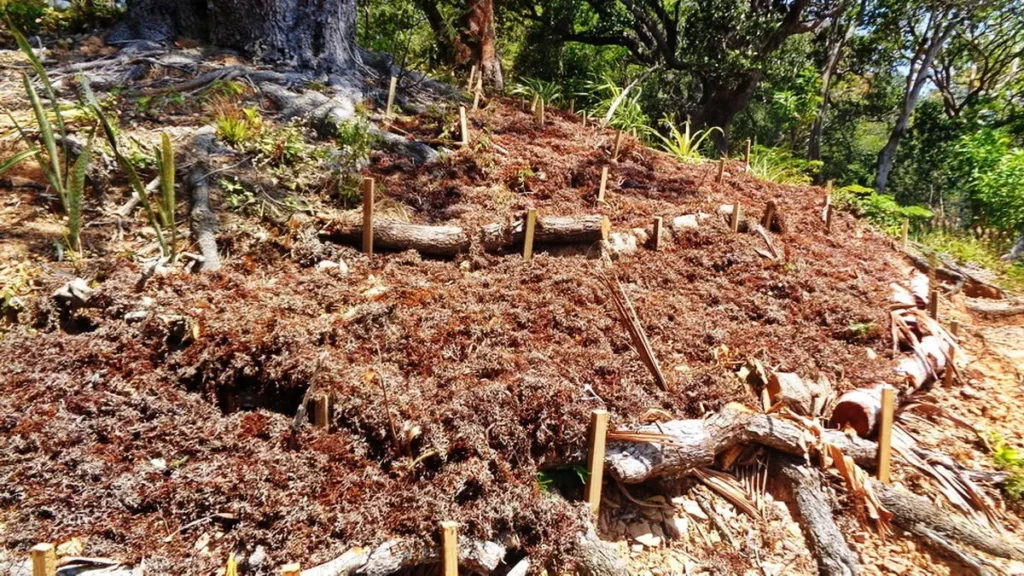
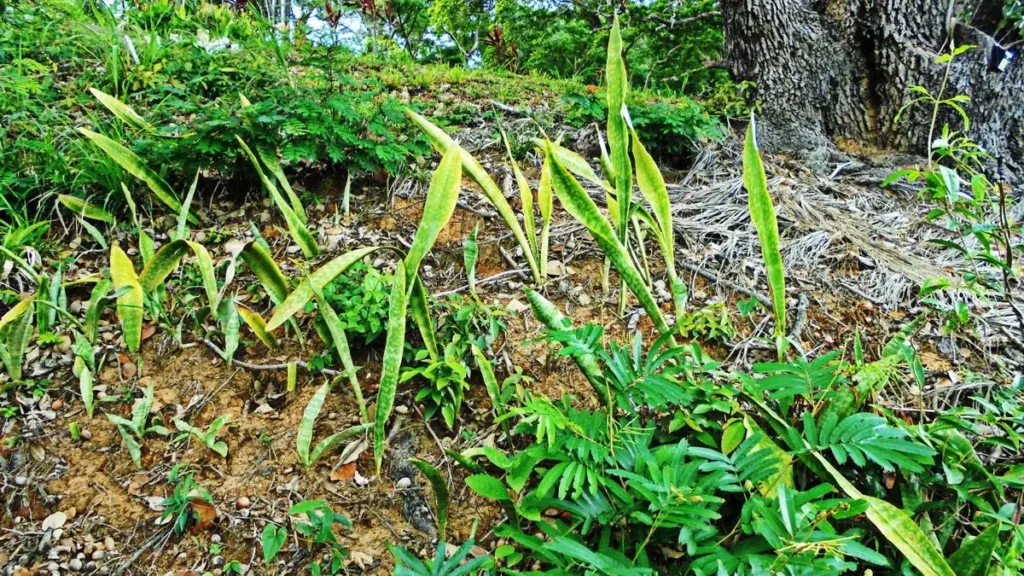
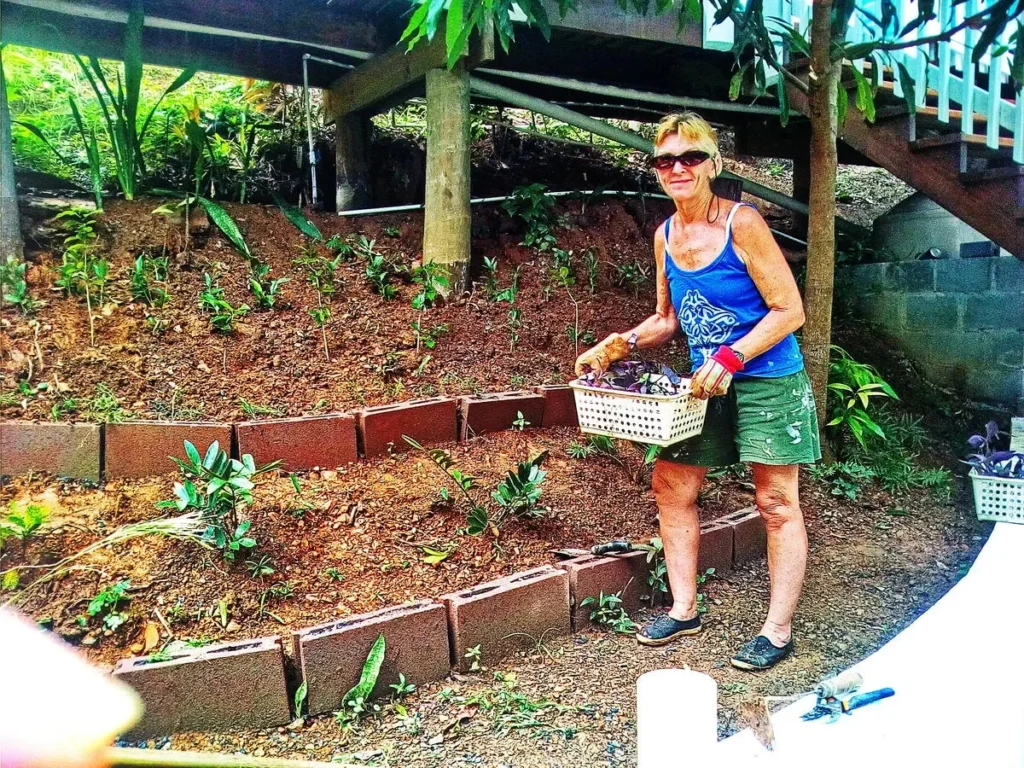
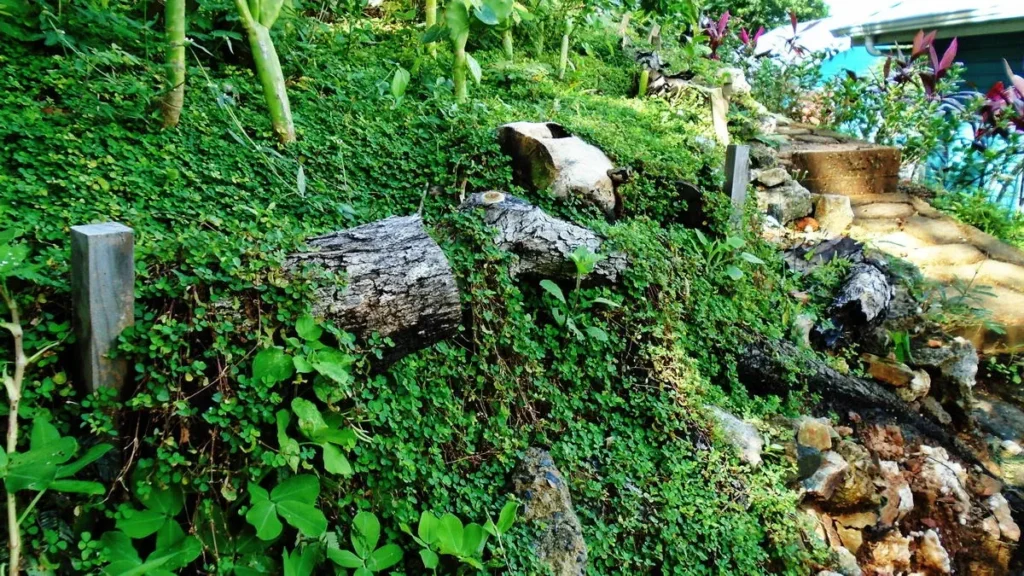 The pathways were acting as a good system of terracing to control and hopefully stop the mud runoff. But I also went around and terraced the hell out of every area I could, with whatever was laying around the place.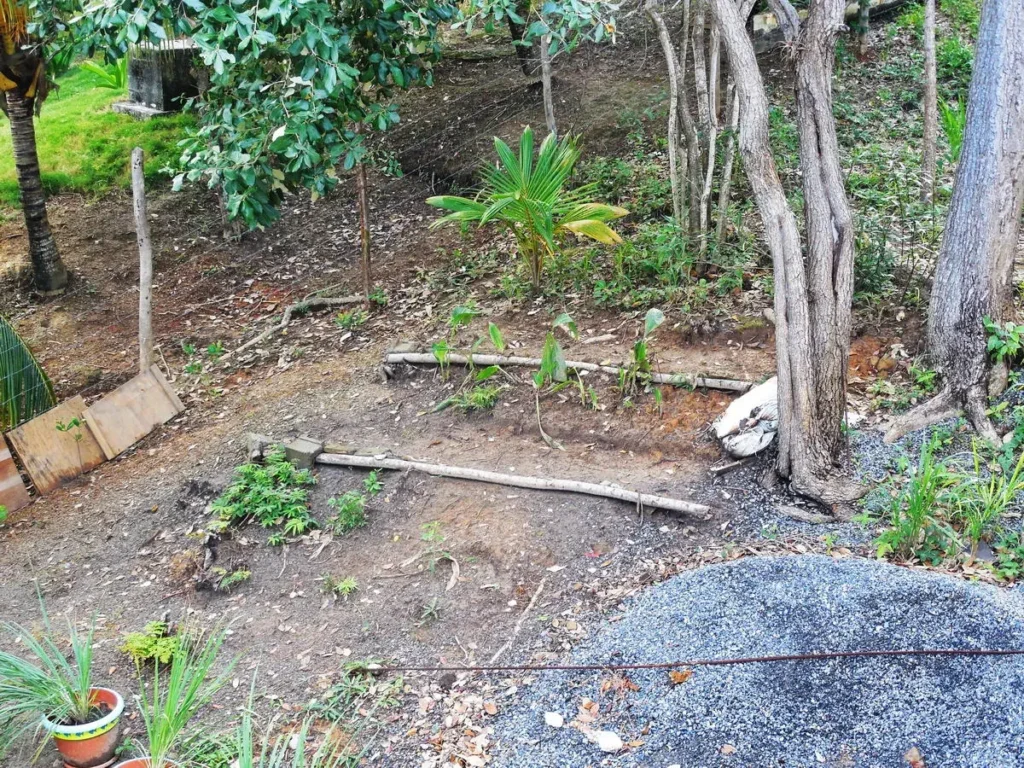
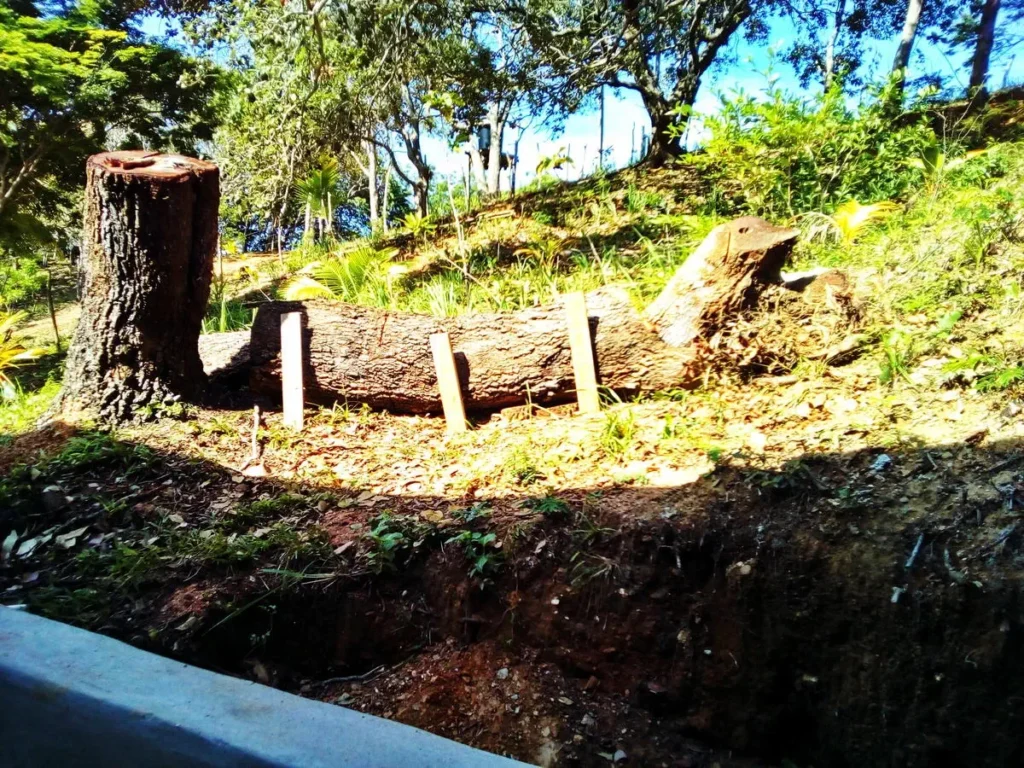 Sticks, limbs, whole tree trunks, rocks, cement blocks. It all helps stop the mud!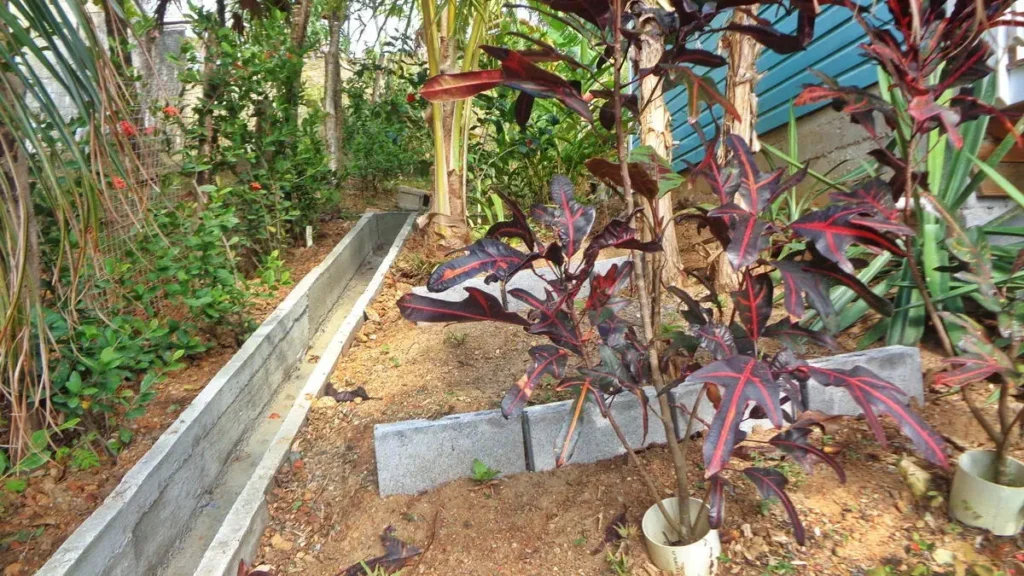
 The nursery achieved it’s final form, with Ed making me a great set of planting benches, and a hose for watering. Overflow just before the rainy season goes behind the house waiting to be planted out.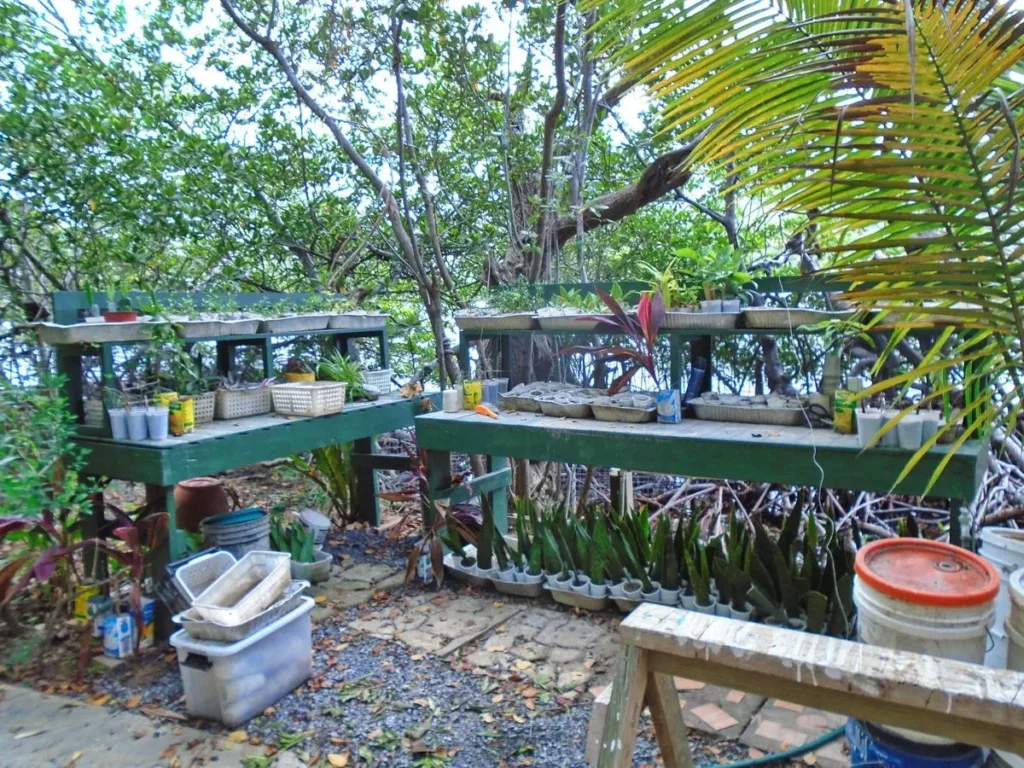
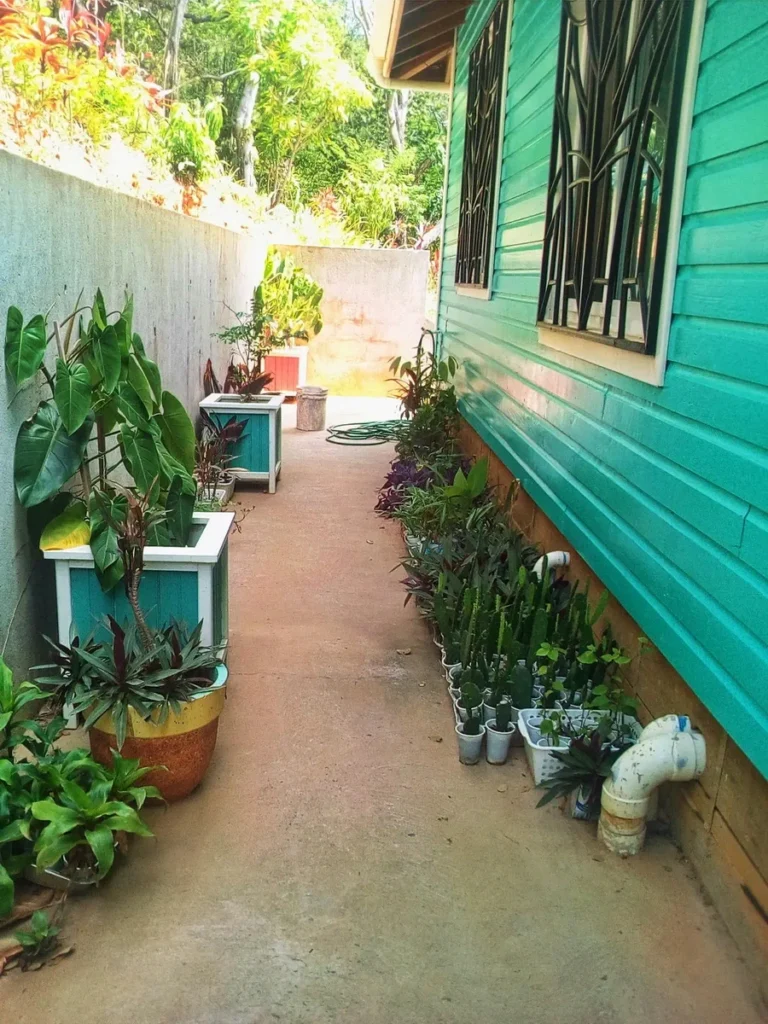 Who ever thought growing grass would be so hard? There are so many weeds here and they are so tough to eradicate. I have a guy comes and whacks the tops off them before they go to seed. I researched the best, toughest tropical grass, and it was Argentine Bahia grass. So, I searched on the island, no luck, and instead ordered some bags in. Started a sod farm, and planted it out. It did ok for a while, but then fizzled out. Maybe too much shade, drought, soil. I don’t know.
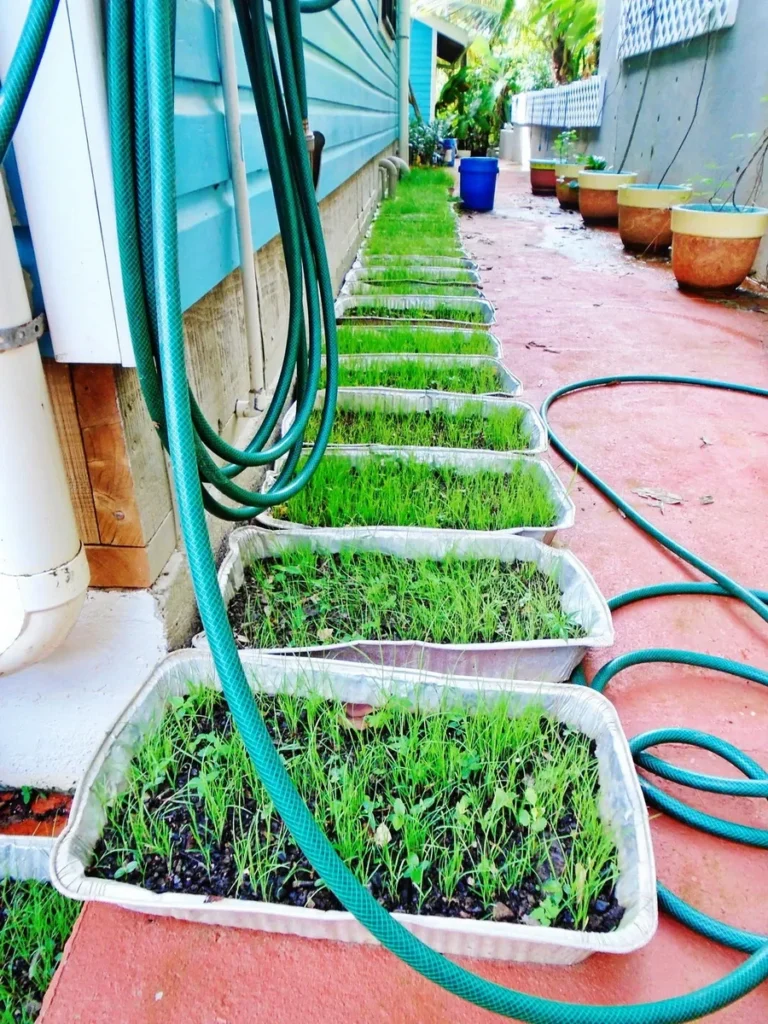 There is a grass here called zoyosia or something like that, and it is very touch, but needs cutting or walking on or it gets all lumpy in a cancerous looking way that gives me the creeps. I wanted a no-mow solution.
I was given some of this perennial peanut grass, and I managed to fill up a small area with it. It was doing pretty good, and ever since then I have more or less continuously propagated this stuff. I have figured out how to do it in the nursery almost 100% success rate. So now it’s going everywhere. It’s no-mow, drought tolerant, great on a hill and is a nitrogen fixer like clover. A winner.
Here’s the original patch.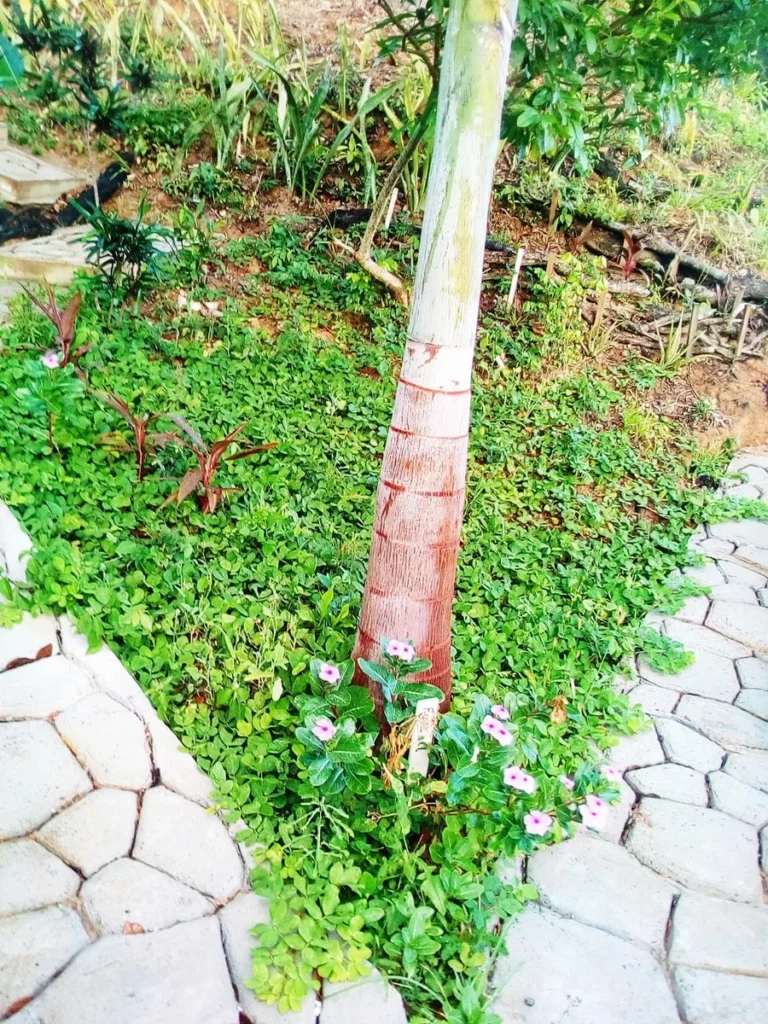 And where I started to move it.
I totally clear out a section of weeds and then immediately plant the little cuttings, after rooting them in the nursery.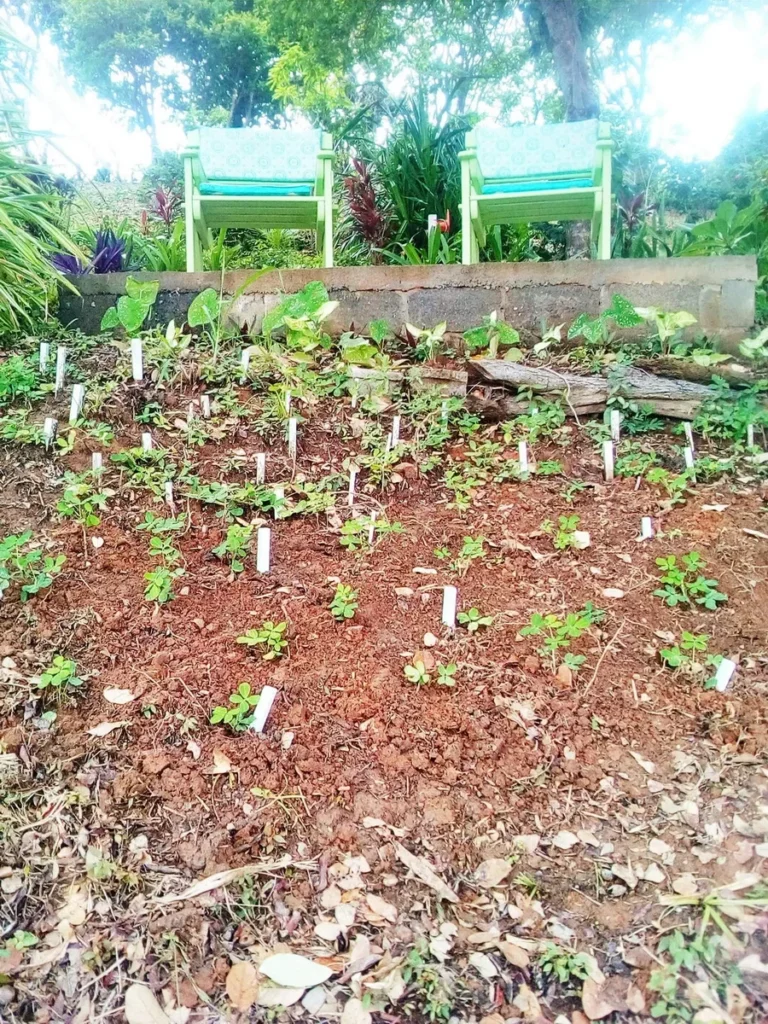
It took 4 years of pre-rainy seasons, but I have done a big hillside….and I’m still continuing to do other areas of the property.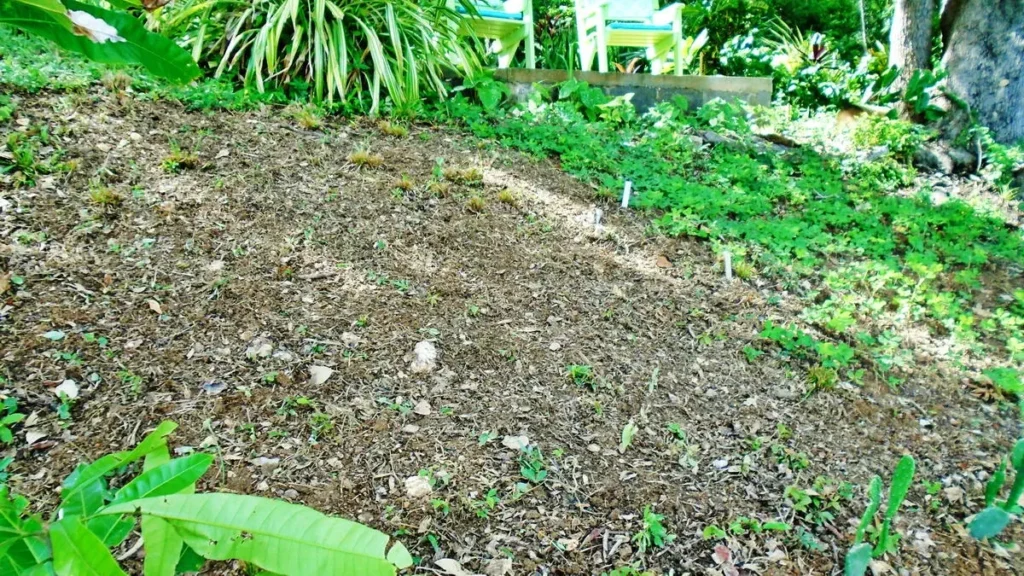
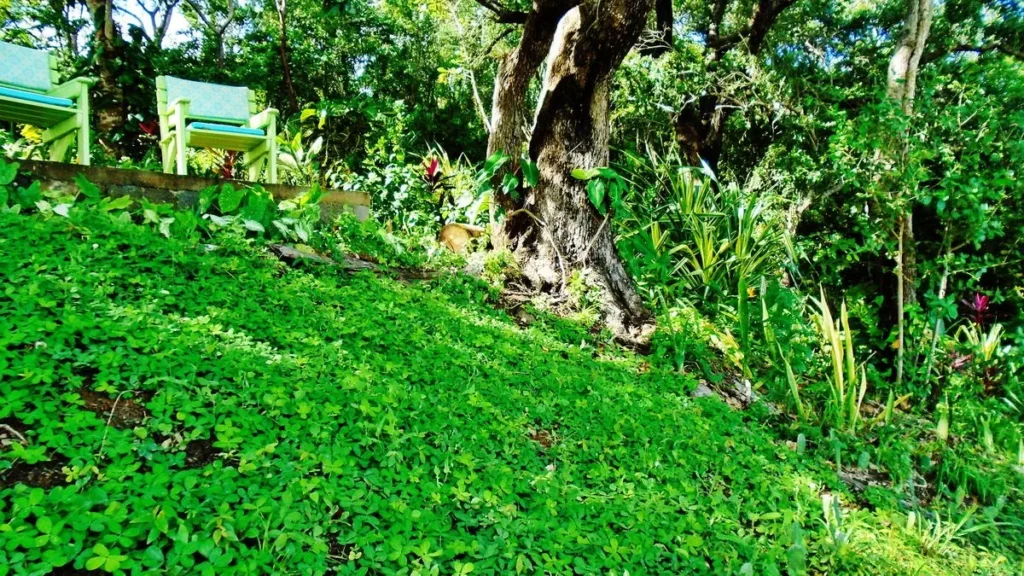 The planting and weeding never stops.
 The pathways are almost maintenance free except for the occasional washing off of slippery black algae in the rainy season.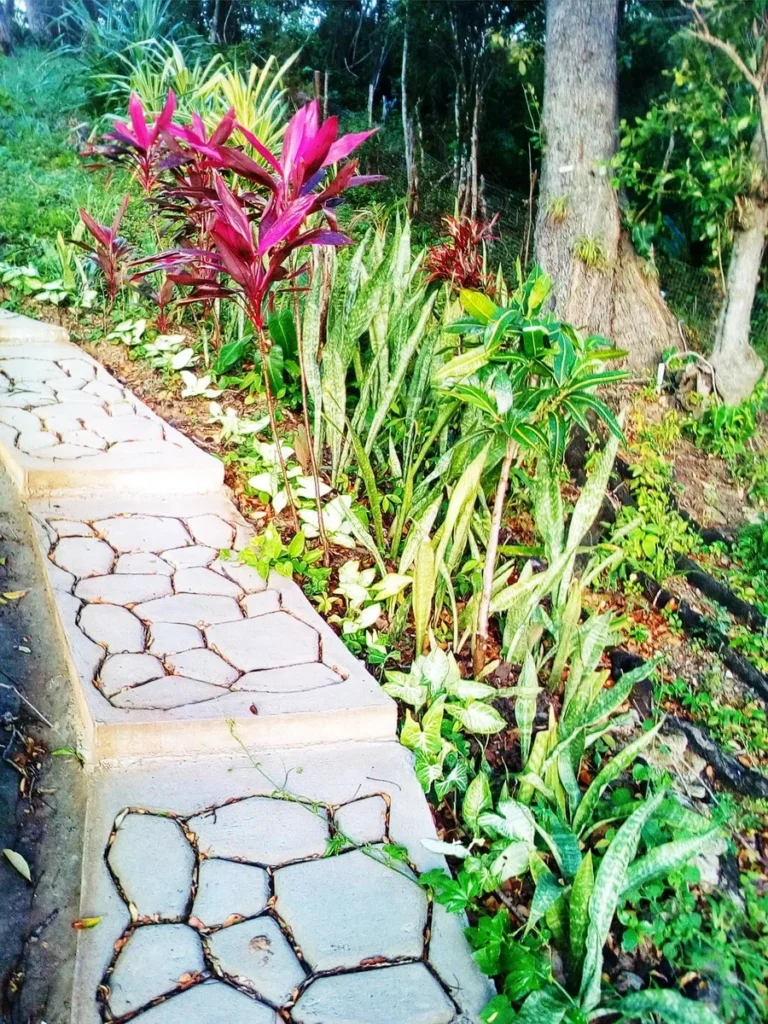
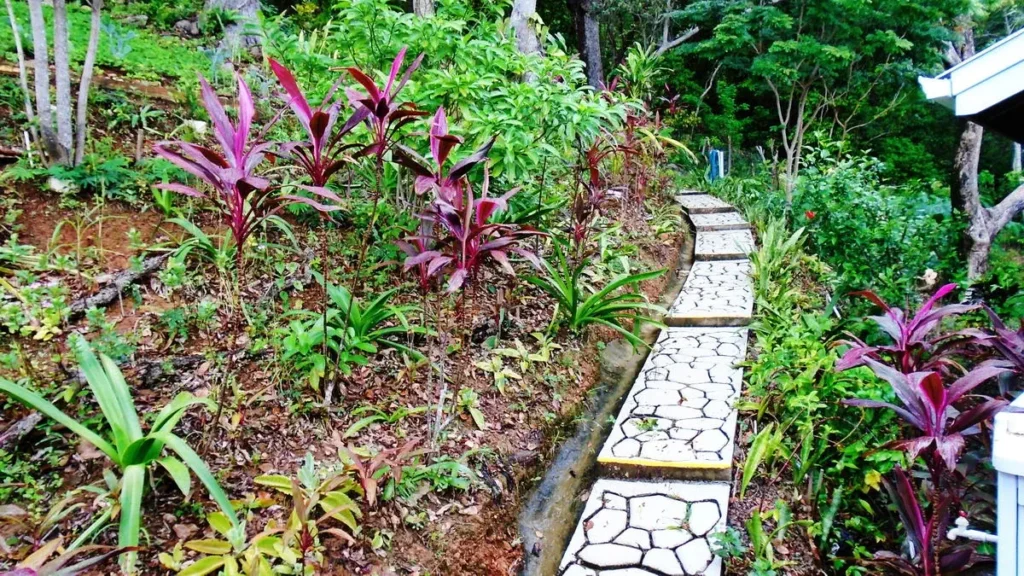 And the botanical gardens continue to change and grow!
Oh…..and just so you know, I have planted 14,424 plants here. What kind of weirdo counts their plants?